


Holy Liminality: Celebrating Commencement Inside a Correctional Facility
April 29, 2026

Kara Shroyer

One of my favorite moments of the academic year takes place each spring. After their red-trimmed hoods have been properly draped and their mortarboards pinned, North Park Seminary graduates stand outside the closed doors of Anderson Chapel on the University’s campus, waiting to process inside, joyful and solemn at once. As they anticipate their moment—when the organ music swells, and the doors swing open to admit them into the ceremony—I like to stand and watch them grin, wipe away tears, and squeeze one another’s shoulders. I like to remember the pieces of their stories I’ve heard, and the many ways God has been faithful to them. It is a liminal moment that echoes of eternity.
But what is true of our “outside” graduation celebration was doubly true inside Logan Correctional Center last spring, where NPTS hosted a commencement service for a cohort of thirteen students. While this was not the first graduation celebration the seminary had organized for a cohort of incarcerated students, it was our first at a women’s prison, and bittersweet because the facility’s significant distance from Chicago had made it extra challenging for students, instructors, and seminary staff to engage with one another as fully as expected or hoped.
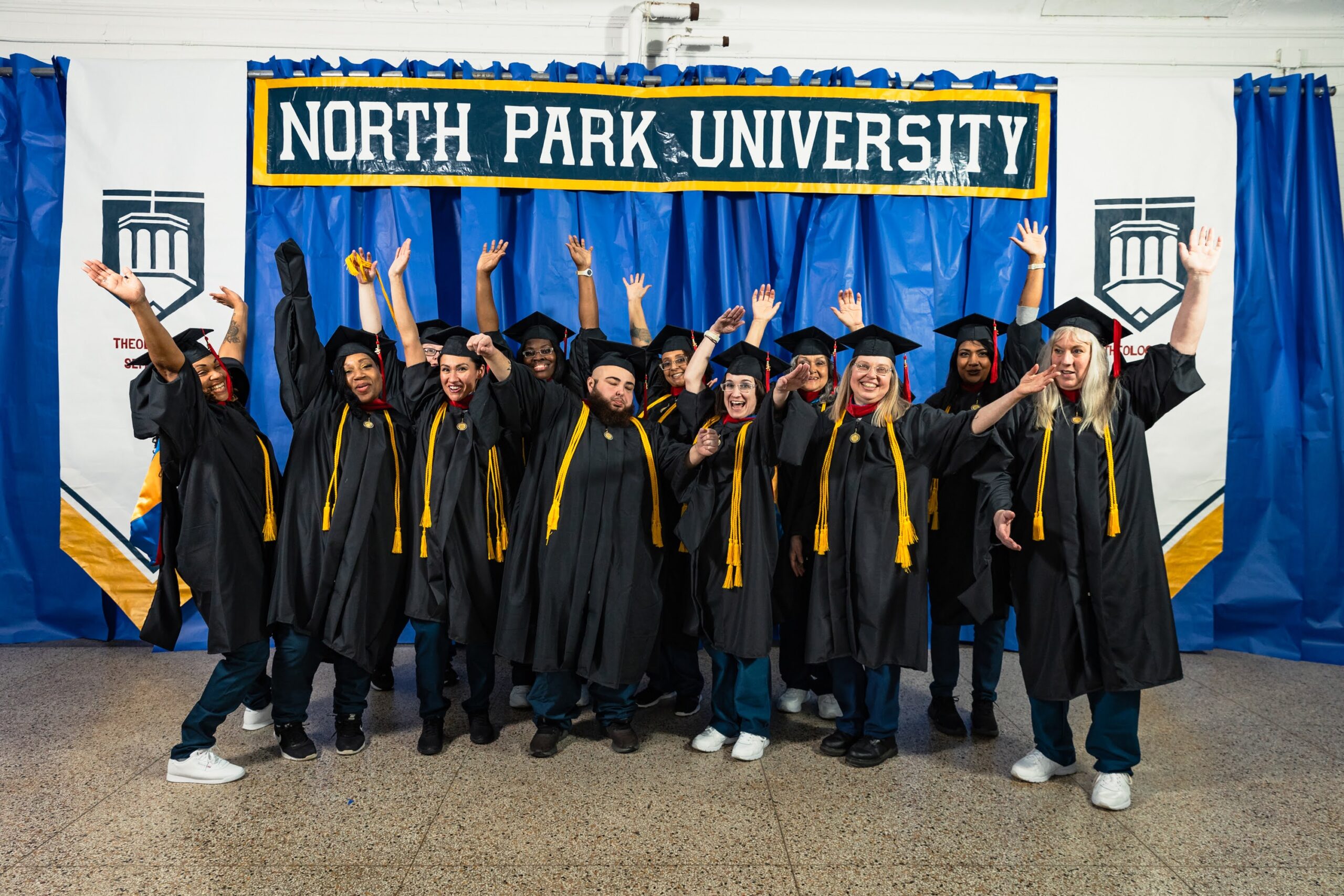 Throwing a commencement service inside a correctional facility reverses the traditional process. Instead of graduates traveling from near and far to campus for their celebration, it’s the party that travels to meet its celebrants. Everything—from people to photography equipment, dessert to diploma covers—gets itemized, background-checked, approved by the Illinois Department of Corrections, packed into vehicles for the three-hour drive, then transferred onto wagons and carts to roll through metal detectors and prison yards dotted by signs reading, “Trespassers will be shot.” Bobby pins and staples aren’t allowed inside; neither are aluminum trays or foil. IDOC recommended that we bring cold sandwiches for the graduation lunch—the first meal in years that some of our students would share with their single approved guest.
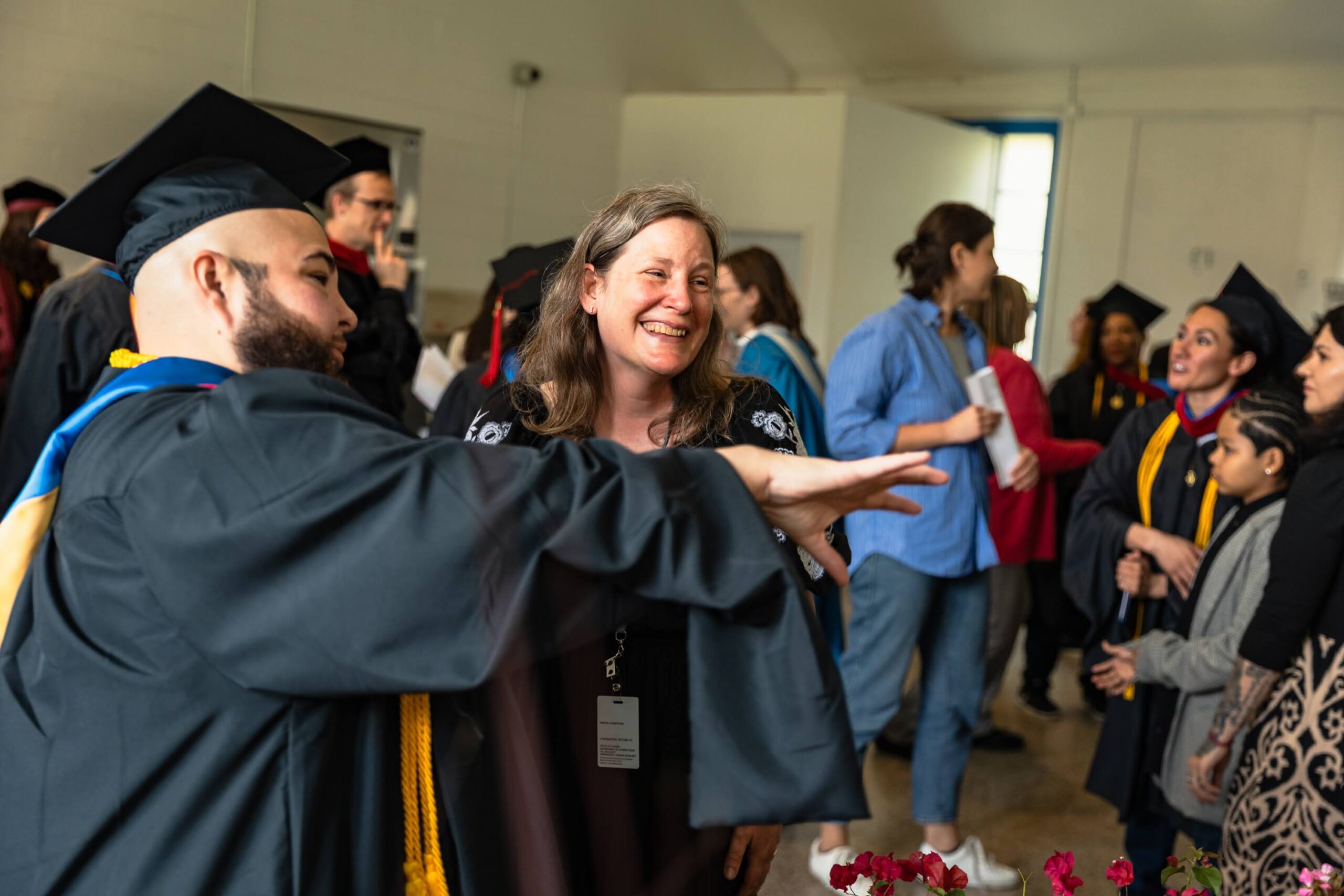
  Yet as our group of faculty, staff, and guests began to gather in the Visitor Center, waiting to be admitted inside, I experienced that same strange and beautiful liminality, the sense that we were all about to stumble onto holy ground.

After all, the inconveniences we had experienced as instructors and staff paled in comparison to the struggles faced by our students within the carceral system. While it is not easy or comfortable to collaborate with the corrections system in the United States (nor should it be for followers of Jesus, I would argue), most of us will never have to navigate living “on the inside.” These thirteen graduates had not only persevered in the face of the indignity and social erasure incarceration attempts to inflict but had also faced the intellectual and spiritual rigors of graduate-level theological education without regular access to technology, research materials, or support systems.
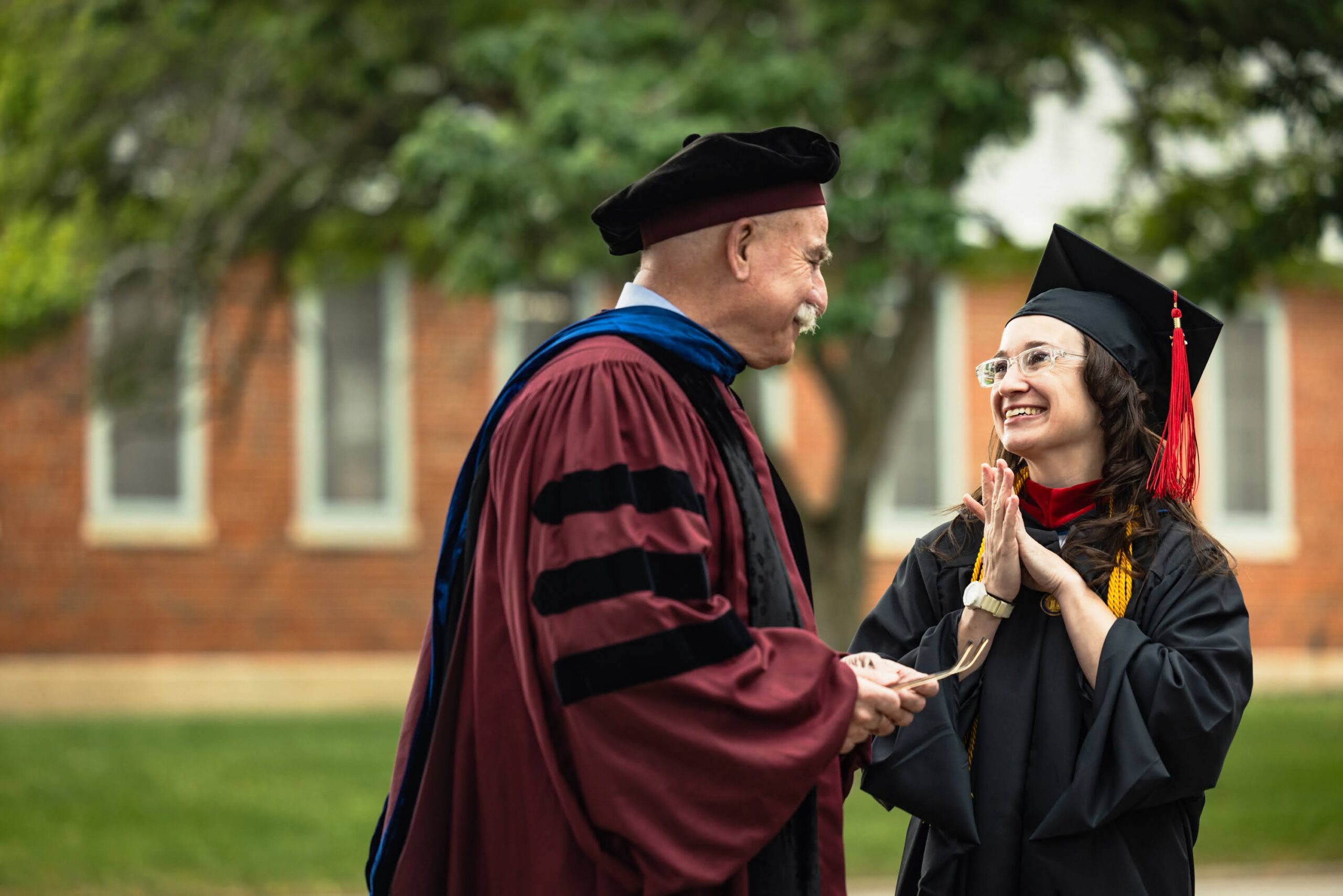
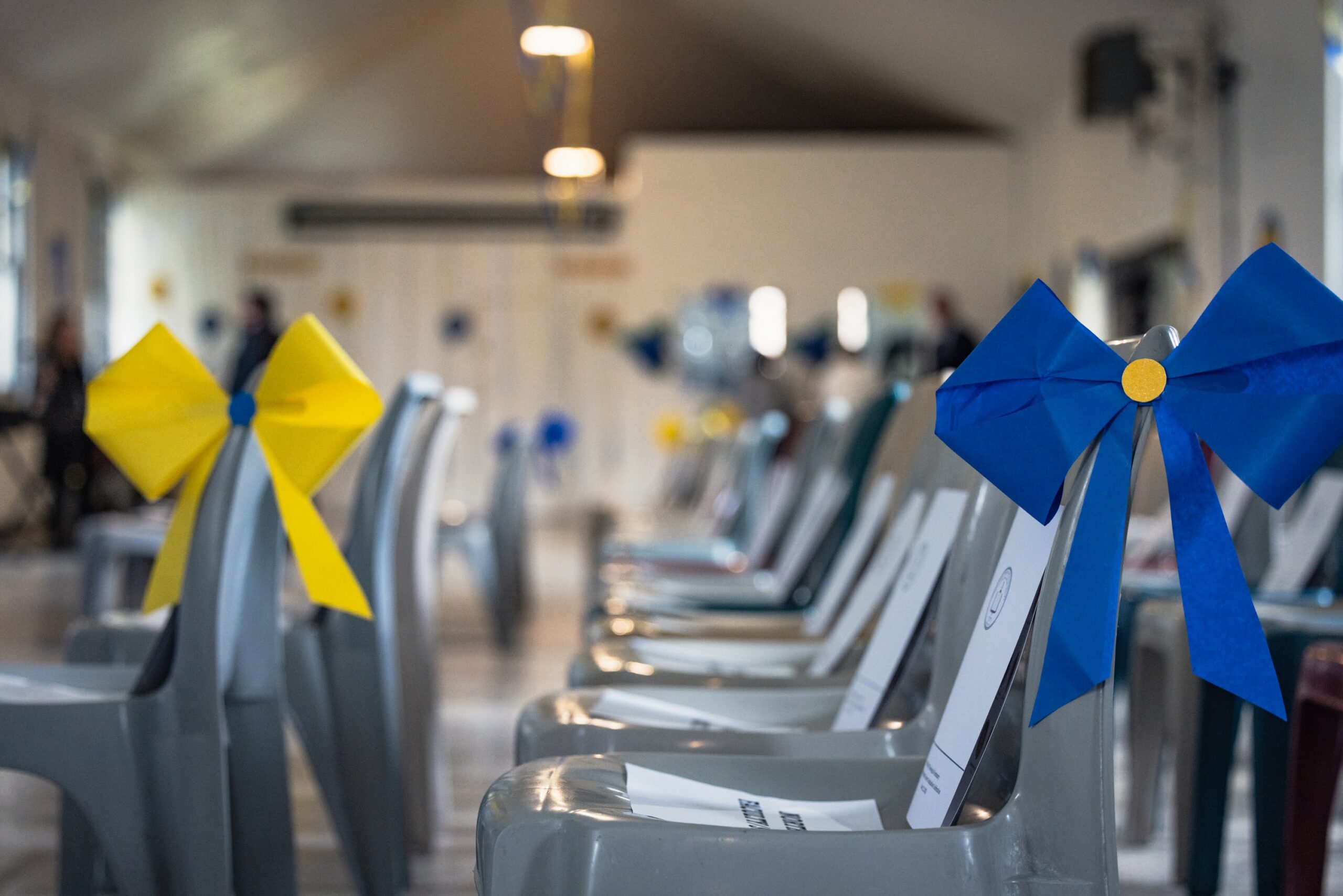
They had also volunteered to make all the decorations for commencement, crafting dozens of paper flowers and banners by hand. When we entered the long, narrow building where the service would take place, we found the graduates hanging streamers, curtains, and bows, transforming the stark space into a colorful sanctuary. Their joy filled the room like a warm glow.

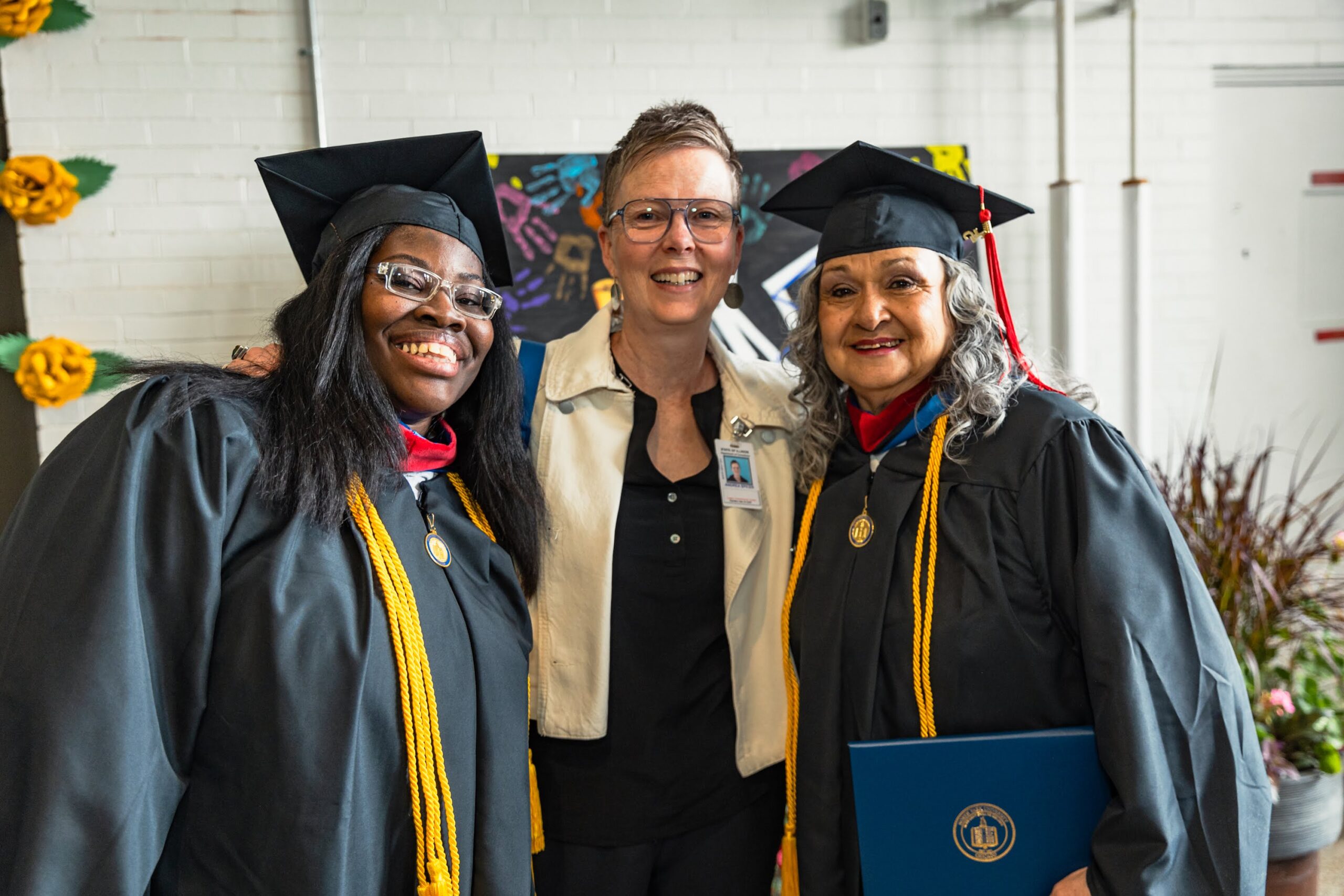
After donning their caps and gowns, they processed outside into the prison yard to await their guests’ arrival and to have their pictures taken. Their joy now seemed to overflow to the rest of the facility. Other women in custody called their congratulations from behind barred windows and on their way to work assignments, clapping and cheering. Armed guards cracked smiles and good-natured jokes. There were even a couple of puppies to cuddle and take pictures with, thanks to a service-dog training program that employs individuals in custody inside the facility. Holy ground indeed.
The graduates processed inside to receive their diplomas and greet their guests, standing proud and beautiful in their regalia. During the ceremony, we heard them sing, share testimonies of God’s faithfulness, and speak truth to power. As they crossed the makeshift “stage” to receive their diplomas, there was not a dry eye in the house.
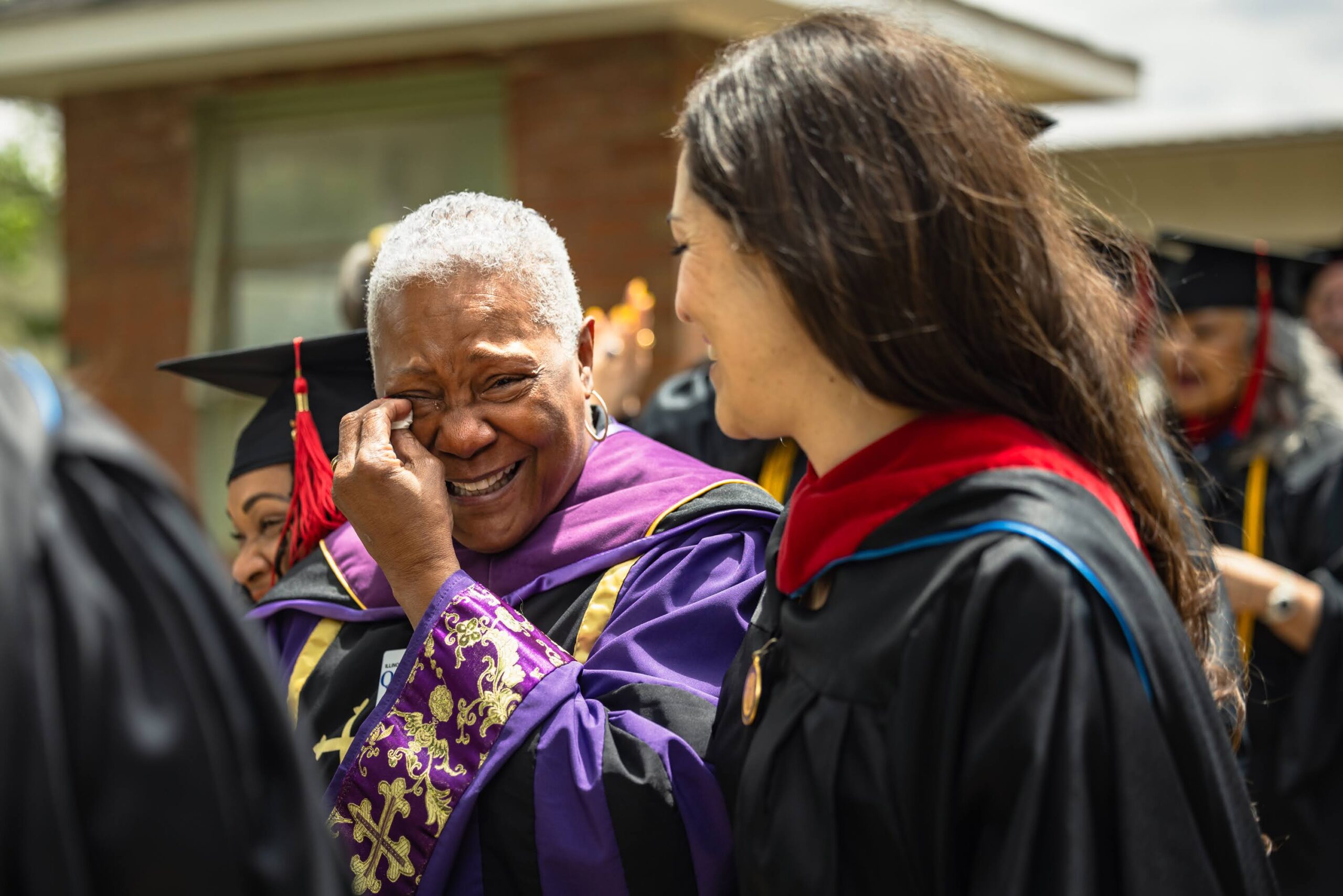
Many Christians today seem to have forgotten Jesus’s promise that we meet him when we visit the incarcerated (Matthew 25:31–46). While a diploma can make a big difference in an incarcerated person’s life, it is an incarcerated person’s life—renewed by and imbued with Christ’s redemptive power—that could transform society at large. When we forget to whom Jesus gives himself without reserve, and in whose company we are most likely to meet him, and in what way he has chosen to communicate his gospel to the world (2 Corinthians 4), we miss his invitation to witness and join in his work of redemption, reconciliation, and restoration.
The good news is that it is never too late to say “yes” to this Jesus and to meet him in the company of his most beloved. I am so honored to have received that grace last spring, and pray to receive it again at North Park Theological Seminary’s upcoming Commencement ceremony inside Illinois River Correctional Center.
 Read all School of Restorative Arts updates here.
SHARE WITH FRIENDS