




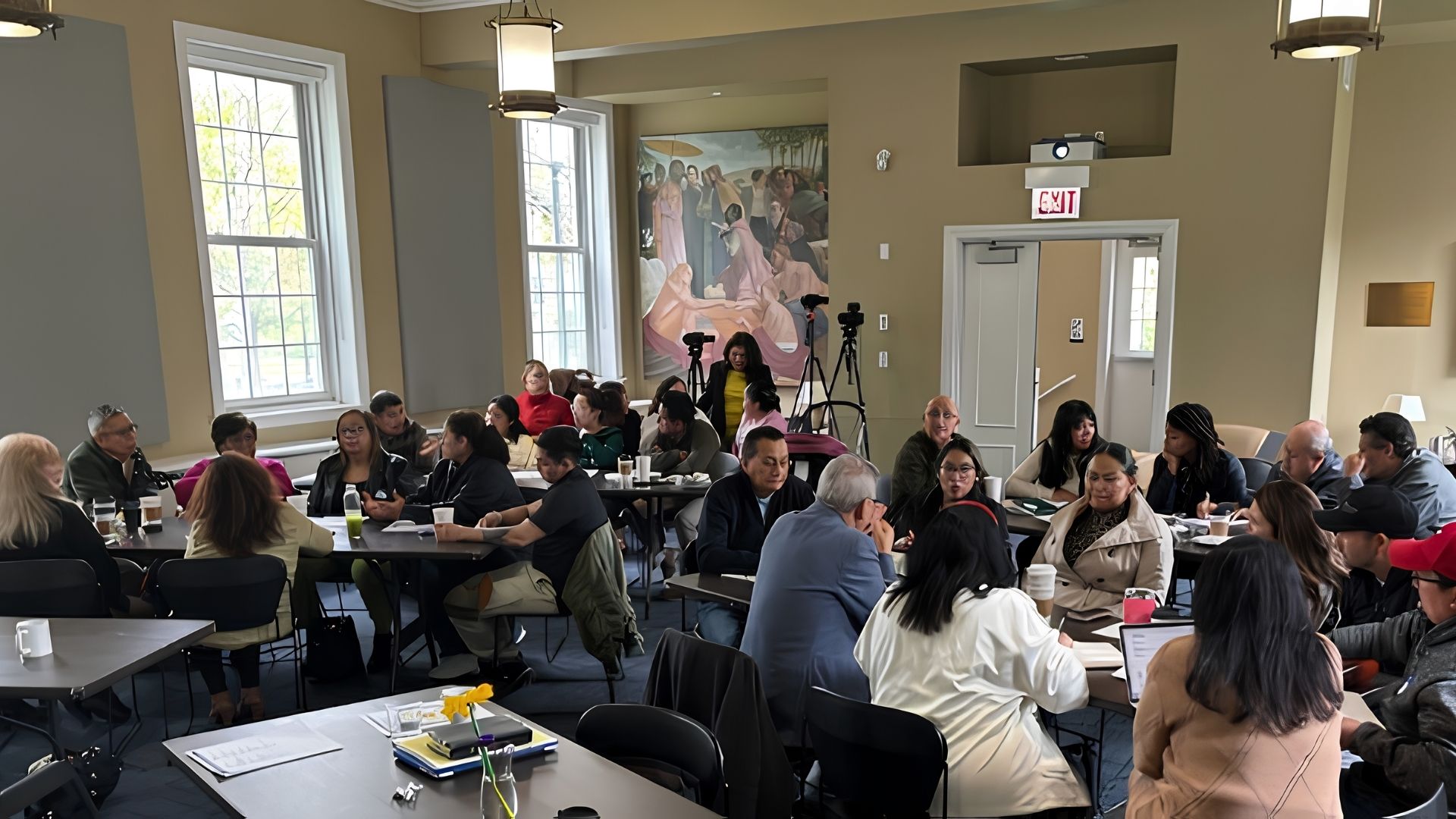
In times of uncertainty, constant change, and limited resources—such as those faced by the Latina immigrant church—pastoral care can prove particularly challenging. North Park Theological Seminary hosted an all-day Spanish-language workshop for Latino and Latina pastors and leaders seeking to accompany those navigating difficult times with greater sensitivity and wisdom and to acquire practical tools to strengthen leadership.
The event served as a formative opportunity to delve into topics such as anxiety, depression, and trauma, as well as to learn how to support the grieving process. It also addressed the importance of self-care in ministry, serving as a reminder that pastors, too, require spaces for rest and restoration.
Armida Belmonte-Stephens (ABS): The training was so well attended, and we have already received really positive feedback from the participants and how much they appreciated the training.Reflecting on the themes and conversations from the event, what moments or insights from the day stood out to you as especially meaningful or important for Latino and Latina pastors serving their immigrant communities?
Angie: What stood out to me the most during the presentation were the people nodding their heads as they saw examples of how mental health and the Bible can complement each other to promote overall well being. Furthermore, it was encouraging to hear people’s testimonies about how they saw certain symptoms be present in their lives and how they were beginning to realize and be open-minded about the kind of support available for them and their communities. It was important to see them become empowered and ask questions about practical ways they can support each other’s mental health journeys as well as their pastors in preventing compassionfatigue and burnout. I am pleased to have been able to encourage and validate that seeking professional support is not a sign of weakness or a lack of faith but simply a sign of vulnerability and strength. They can be the example in leading lives that challenge the unhealthy and isolating beliefs held about therapy and mental health support in the Latino community.
Eugenio: One of the most meaningful aspects of the day was seeing how deeply the themes of mental health, grief, and faith resonated with Latino pastors serving immigrant communities. Many are carrying not only their own emotional and spiritual burdens, but also the weight of their congregations’ stories, stories marked by migration, loss, trauma, and resilience.
A particularly significant insight was the growing awareness that emotional struggles such as anxiety, depression, and prolonged grief are present in our churches, yet often remain unspoken due to stigma or lack of tools. It was powerful to see pastors begin to name these realities more openly and recognize that addressing mental health is not separate from ministry, it is an essential part of shepherding.
Another important moment was the integration of biblical truth with psychological understanding. Participants expressed appreciation for seeing that caring for mental and emotional health is not contrary to faith, but rather deeply aligned with God’s concern for the whole person, body, soul, and spirit.
Finally, there was a strong sense of encouragement as pastors realized they are not alone in these challenges and that the church can become a place of healing, not just for spiritual needs, but for emotional wounds as well.
ABS: If there’s one message you would want the broader North American church to understand about supporting Latina immigrant churches and communities, what would it be and why?
Angie: Latina Immigrant churches and communities would deeply benefit from partnering with Christian based mental health agencies or providers that can come in and support the varying needs of the community. From providing psychoeducation on specific mental health conditions and their impact to hosting groups focused on processing trauma, grief and loss, depression, anxiety management, to creating healthy relationships and understanding family patterns. Mental health support is often seen as a lack of faith in the Lord, however in the scriptures we see how mental wellbeing is such an important part of our general health as there is an inseparable union among our bodies, minds, and spirits.
Eugenio: Latino immigrant churches are carrying profound spiritual vitality alongside significant emotional and social burdens, and they need to be supported holistically, not just programmatically. Many immigrant communities live under constant stress: uncertainty around legal status, economic pressure, family separation, cultural displacement, and unprocessed grief. Yet, they also demonstrate deep faith, perseverance, and communal strength. Support, therefore, requires listening with humility, understanding cultural realities, investing in long-term relationships, and equipping leaders to address mental and emotional health biblically and practically.
Access all sessions from our April 25, 2026, event “La salud mental y la Biblia: La importancia del cuidado emocional y mental” here. View and register for upcoming NPTS programming here.
SHARE WITH FRIENDS