


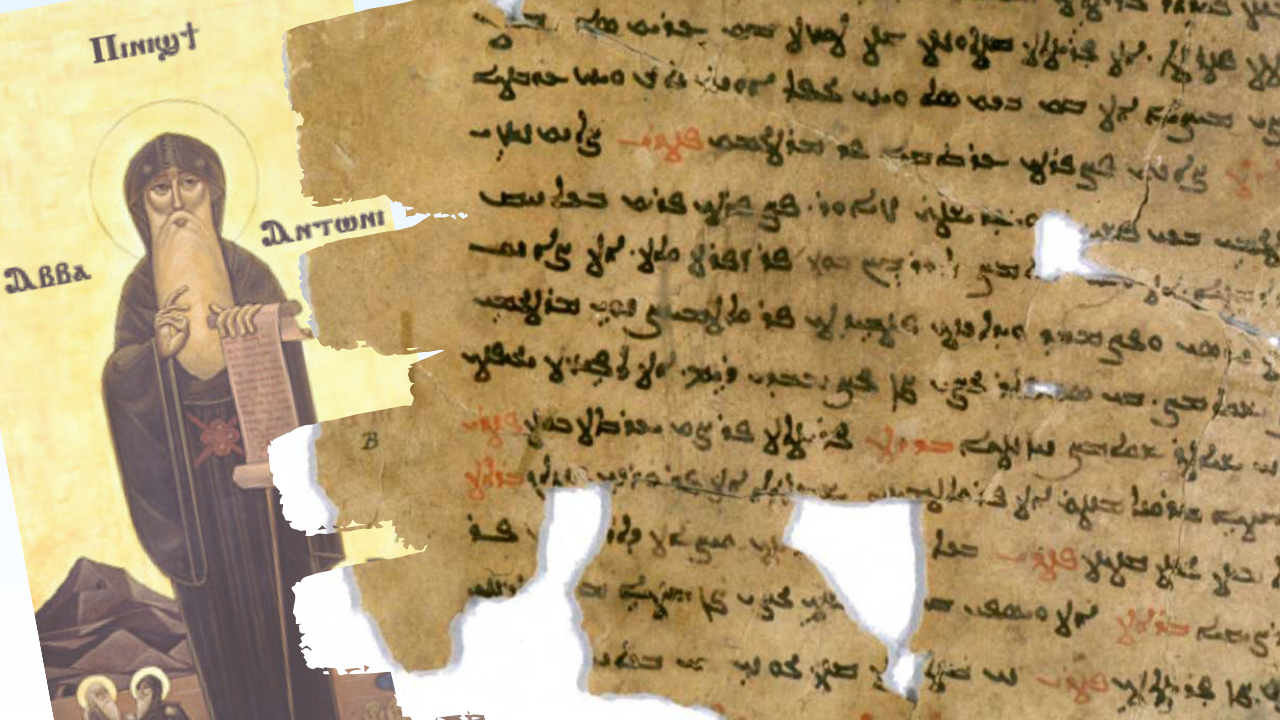
Sometime in the fourth century, a young monk walked out into the Egyptian desert, found an old man sitting outside his cell, and asked him for a word. Not a sermon or homily. Just a word, something small enough to carry home. “Abba, give me a word” became one of the most common requests in early Christian spirituality.
I hear some version of that request from both pastors and the faithful members who keep the coffee percolating. It usually sounds like this: I’m running on empty. I used to be inspired. I’m surrounded by people, and I don’t know who I can trust.
Most of the help offered to tired leaders is presented as a technique: Set better boundaries. Delegate more. Download this app. Some advice is useful. But I’ve come to wonder about a deeper question: What if exhaustion isn’t only a problem to solve? What if it’s also an invitation to uncover a different way of being with God?
The desert mothers and fathers thought so.
What the Desert Knew
Starting in the late third century, thousands of Christians in Egypt, Palestine, and Syria left the cities for the desert. Antony of Egypt (d. 356) is the most widely known, alongside elders like Amma Syncletica and Abba Moses. Their short sayings were passed down, collected, and recited.1Ward, Benedicta, trans. The Sayings of the Desert Fathers: The Alphabetical Collection. Kalamazoo, MI: Cistercian Publications, 1975.
Evagrius of Pontus described a temptation he called acedia, “the noonday demon,” borrowing the phrase from Psalm 91:6. In the heat of the afternoon, he wrote that the sun seemed to stop moving. The monk keeps looking out the window, resents his work and his neighbors, and decides God would be easier to find somewhere else.2Evagrius Ponticus. The Praktikos and Chapters on Prayer. Translated by John Eudes Bamberger. Kalamazoo, MI: Cistercian Publications, 1972, 12. That describes a heaviness where nothing satisfies and leaving starts to feel like the only way to breathe.
The elders didn’t answer with a twelve-step plan. Abba Moses told a struggling brother, “Go, sit in your cell, and your cell will teach you everything.”3Ward, Benedicta, trans. The Sayings of the Desert Fathers: The Alphabetical Collection. Kalamazoo, MI: Cistercian Publications, 1975, Moses 6. Stay. Don’t run from the place where God is waiting to meet you.
They also refused to treat rest as a weakness. A hunter once found Antony laughing with the brothers and was mocked. Antony had him draw his bow, then draw it further, and further still, until the hunter protested that it would break. Antony said the brothers are the same. Stretch them beyond measure and they break.4Ward, Benedicta, trans. The Sayings of the Desert Fathers: The Alphabetical Collection. Kalamazoo, MI: Cistercian Publications, 1975, Antony 3.
And they knew solitude and isolation aren’t the same thing. “Our life and our death are with our neighbor,” Antony said.5Ward, Benedicta, trans. The Sayings of the Desert Fathers: The Alphabetical Collection. Kalamazoo, MI: Cistercian Publications, 1975, Antony 9.
Basil the Great: Give Heed to Yourself
An old word in the Christian tradition and preached by Basil the Great, is simple: pay attention to yourself. For those of us who spend our days paying attention to everyone else, that’s a surprisingly countercultural command. What are you carrying? What are you avoiding?
Basil was a fourth-century bishop who traveled through Egypt and Syria to learn from the desert monks. Preaching on Deuteronomy 15, he drew a line between ourselves, what belongs to us, and what surrounds us.6Basil of Caesarea. “Homily on the Words ‘Give Heed to Yourself.'” In On Christian Doctrine and Practice, translated by Mark DelCogliano. Popular Patristics Series 47. Yonkers, NY: St Vladimir’s Seminary Press, 2012. Leaders spend most of their energy on the last two: the budget, the building, the calendar. Basil turns us back to the soul God is forming.
Still, he never meant this as a retreat into ourselves. For Basil, attending to your soul and caring for your neighbor belonged together. He founded communities that prayed and worked side by side, and he built a hospital for the poor. Noticing your own soul isn’t selfish. It’s how you serve others.
Eugene Peterson: The Unbusy Pastor
Eugene Peterson made a confession in The Contemplative Pastor that has stayed with me. He admitted his busyness had less to do with faithfulness than with vanity and laziness. He wanted to look important, and it was easier to let others set his agenda than to do the slow work of prayer and attention.7Peterson, Eugene H. The Contemplative Pastor: Returning to the Art of Spiritual Direction. Grand Rapids: Eerdmans, 1989.
His remedy wasn’t more efficiency. It was attention. The subtitle of that same book tells you where he was headed: Returning to the Art of Spiritual Direction.
Scripture shows the same patience with tired servants. When Elijah collapsed under a broom tree and asked to die, God didn’t send a rebuke. God sent bread, water, and sleep, and then more bread (1 Kings 19:4–8). Only afterward did Elijah hear the still small voice. A weary leader doesn’t just need fewer meetings. A weary leader needs to be fed, rested, and attended to.
Accompaniment, Not Technique
Here is the desert’s most practical gift to listeners. Seekers went to an abba or an amma to ask for a word, and they received companionship. That relationship is the root of what we now call spiritual direction.
A spiritual director doesn’t tell you what God is saying, and direction isn’t counseling or coaching. A director listens with you for God, including in the dry, tired, and lonely places. For a weary leader, that can mean:
- An hour each month where you are not the one in charge
- Someone who helps you notice God in your exhaustion instead of only managing it
- A safe place to say what you can’t say to others that you serve.
A director doesn’t necessarily pull you out of the desert. Sometimes the gift is having someone willing to sit with you there.
I’ve been on both sides of that room, as a pastor of the same congregation for fifteen years and as a spiritual director. My time with cloistered communities, at the Abbey of Gethsemani in Kentucky and at a monastery in South Africa, taught me that the monastic life isn’t heroic. It’s ordinary. Pray, work, eat, rest, and do it again tomorrow, alongside people who know you. I have needed a director in my own seasons of weariness, and I still do.
A Word to Carry
Here are a few questions to sit with, the way the monks sat with a word:
- Where is my “cell,” the place I keep running from, where God might be waiting?
- How far have I drawn the bow, and who has permission to tell me it’s about to break?
- Where is God already at work in my life?
- Who is paying attention to my soul?
Churches can help, too, by protecting their leaders’ rest and asking how they are actually doing, not just how the ministry is going.
Jesus still extends the invitation he always has: “Come to me, all you that are weary and are carrying heavy burdens, and I will give you rest” (Matthew 11:28). The desert mothers and fathers took him at his word. Maybe our weariness is asking us to do the same.
At North Park Theological Seminary, the C. John Weborg Center for Spiritual Direction forms pastors and lay leaders to offer exactly this kind of companionship. It’s one way the Seminary helps the church care for the people who care for everyone else. If you are interested in learning more about the Center, join us on Monday, December 7 for a relaxed conversation, and hear how spiritual directors are formed to help others ask, “Where is God in this?”
Endnotes
- 1Ward, Benedicta, trans. The Sayings of the Desert Fathers: The Alphabetical Collection. Kalamazoo, MI: Cistercian Publications, 1975. ↩︎
- 2Evagrius Ponticus. The Praktikos and Chapters on Prayer. Translated by John Eudes Bamberger. Kalamazoo, MI: Cistercian Publications, 1972, 12. ↩︎
- 3Ward, Benedicta, trans. The Sayings of the Desert Fathers: The Alphabetical Collection. Kalamazoo, MI: Cistercian Publications, 1975, Moses 6. ↩︎
- 4Ward, Benedicta, trans. The Sayings of the Desert Fathers: The Alphabetical Collection. Kalamazoo, MI: Cistercian Publications, 1975, Antony 3. ↩︎
- 5Ward, Benedicta, trans. The Sayings of the Desert Fathers: The Alphabetical Collection. Kalamazoo, MI: Cistercian Publications, 1975, Antony 9. ↩︎
- 6Basil of Caesarea. “Homily on the Words ‘Give Heed to Yourself.'” In On Christian Doctrine and Practice, translated by Mark DelCogliano. Popular Patristics Series 47. Yonkers, NY: St Vladimir’s Seminary Press, 2012. ↩︎
- 7Peterson, Eugene H. The Contemplative Pastor: Returning to the Art of Spiritual Direction. Grand Rapids: Eerdmans, 1989. ↩︎
SHARE WITH FRIENDS