



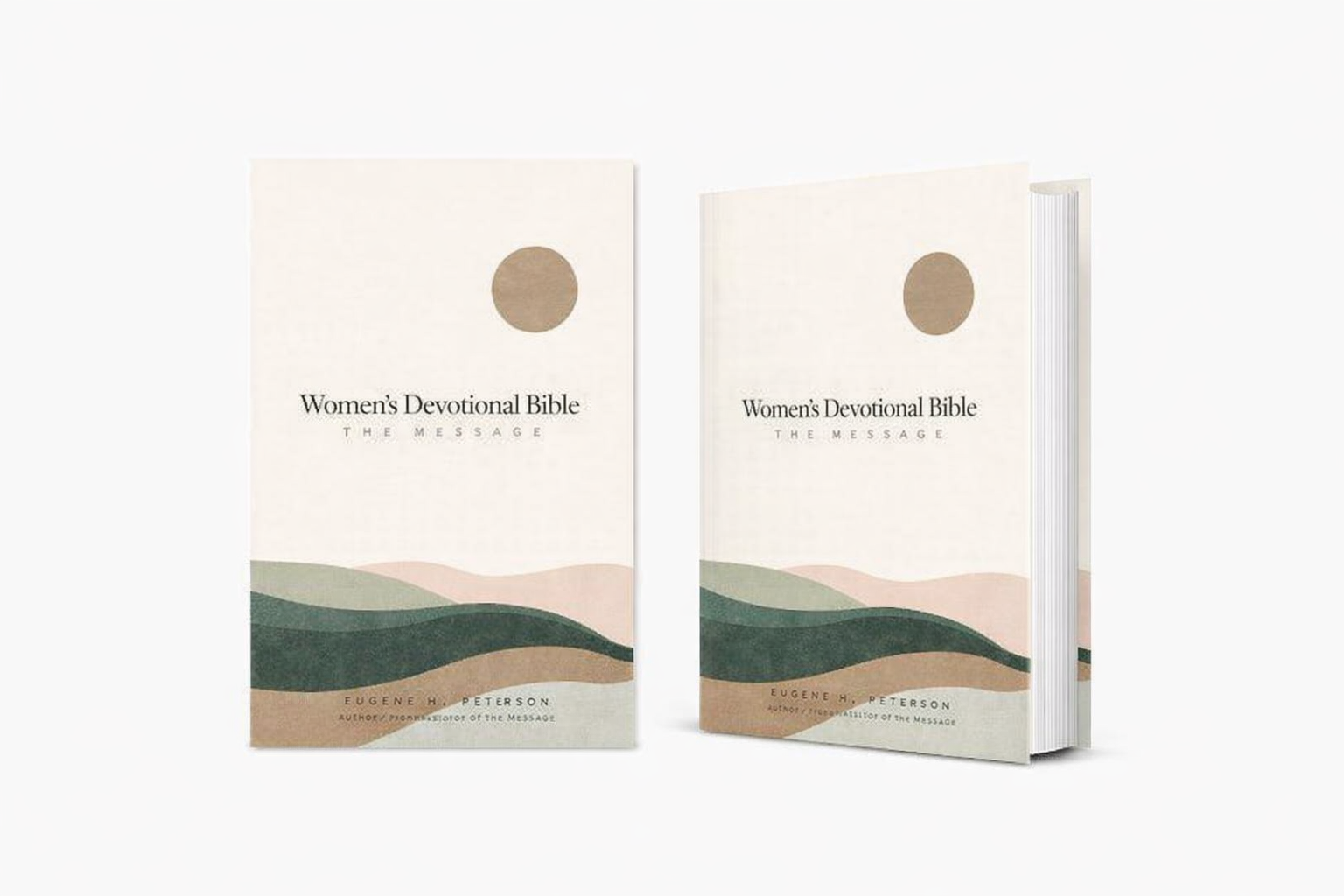
Do women matter to God? Do we matter to the church? These are the questions I heard from the women gathered around our backyard bonfire. Nearly every woman in the circle had spent her life in ministry. Now, nearing or just past retirement, they were facing genuine doubts about their faith and their life’s work.
The pain was palpable as they poured out story after story of women (often themselves) being overlooked or mistreated in the church or Christian community. One woman’s words struck me specifically. “In all my decades in the church, not one teacher mentioned the concubine in Judges 19. Not one pastor—and they have all been male—looked us in the eyes and acknowledged what it means to have such a story in our sacred scriptures or helped us understand it. After so many years, this silence speaks louder than all the other words. It’s almost enough to turn me away from the church for good.”
Her words struck me, not only because I could sense the depths of her pain, but also because earlier that month, I’d been working on that very story for The Message Women’s Devotional Bible I was creating. I had wrestled with what the Judges 19 story conveys to women about women (and to men about women), and why we cannot afford to look away—even now, especially now, so many thousands of years later.
When NavPress’s publisher had called a few months prior to ask if I would be the project editor for the devotional Bible, I’d responded honestly: “I’m not a good choice, since I would never use a women’s devotional Bible.”
His response surprised me. “I know that, Catherine,” he said. “That’s why I want you to do it.”
Our goal was to create an edition of a “women’s” Bible unlike anything we’d seen before. One that shied away from flowery language and design to address the question many women cry out to God: do we, with all our raw, earthy complexities, matter to God? Our goal was to place front and center the women of the Bible who are left unnamed, whose stories are told without their voice or perspective, the women whose lives move the story forward with their bodies, sexuality, or reproductive ability but without their agency or identity. Women who are presented as side characters assisting the men who matter—but with no further curiosity for who they were or how they felt, what they experienced and what it meant to them.
So, I dug in. I flipped through the pages of my Bible (and my seminary notes) and identified nearly 400 topics and characters to highlight throughout the Scriptures, then recruited 80 women pastors, scholars, and writers from diverse backgrounds to join me, voices I would guide and edit into one chorus.
The project we fought for, wrestled with, and labored over was nearly five years in the marking, and what emerged was strong, beautiful, and true.
We brought to the text our question “Do women matter to God?” While we looked at women in ancient times and faraway places, we wrote knowing that this question reverberates in the minds and hearts of women reading and listening today. We also wrote knowing that the (often male) pastors who teach from these texts inadvertently answer this question as they preach, often without realizing how their perspective has been formed or how their conclusions land on those of us in the pew.
The answer we found within God’s redemptive story is a resounding yes. As I wrote in the Bible’s introduction:
From the original garden in Genesis to the healing leaves of the tree in Revelation, the Bible consistently pushes against patriarchal demands. Over and over again, it is not the firstborn who is chosen (as primogenitor required) but the second; not the stronger but the weaker; not the desired but the unnoticed. The women who appear in these pages boldly and creatively use every tool at their disposal to outwit the powerful who oppress them, It is often these women who turn the tide, whose inspired rebellion forms the foundation of God’s redemption: the Hebrew midwives in Exodus, Rahab the spy in Joshua, Mary the mother of Jesus, the woman at the well, and the women who joined Jesus’ ministry, who followed him all the way to the empty tomb.1 The Message Women’s Devotional Bible, p. A11
As you flip through the devotional pages of this Bible, you’ll find the feminine imagery of the Spirit’s role in creation highlighted, as well as the uncomfortably anti-woman metaphors in Revelation. The heroics of Jael and the unnamed daughters of Zelophehad are brought forward, as are the complexities of Sarai and Hagar’s relationship, the faithful ministry of Junia and Pheobe, the yes, the egregious events that left Lot’s wife, the concubine of Judges, and Gomer with no humanity beyond a flattened morality tale.
Yet throughout it all, we find ourselves meeting the God who sees them. Though the men of patriarchies and empires used them without glimpsing their humanity, God—who is neither male nor female—never did.
Women matter to God. Women matter to the church. The good news of God is for all of us, and that is good news indeed.
See Book on NavPressEndnotes
- 1The Message Women’s Devotional Bible, p. A11 ↩︎
SHARE WITH FRIENDS