


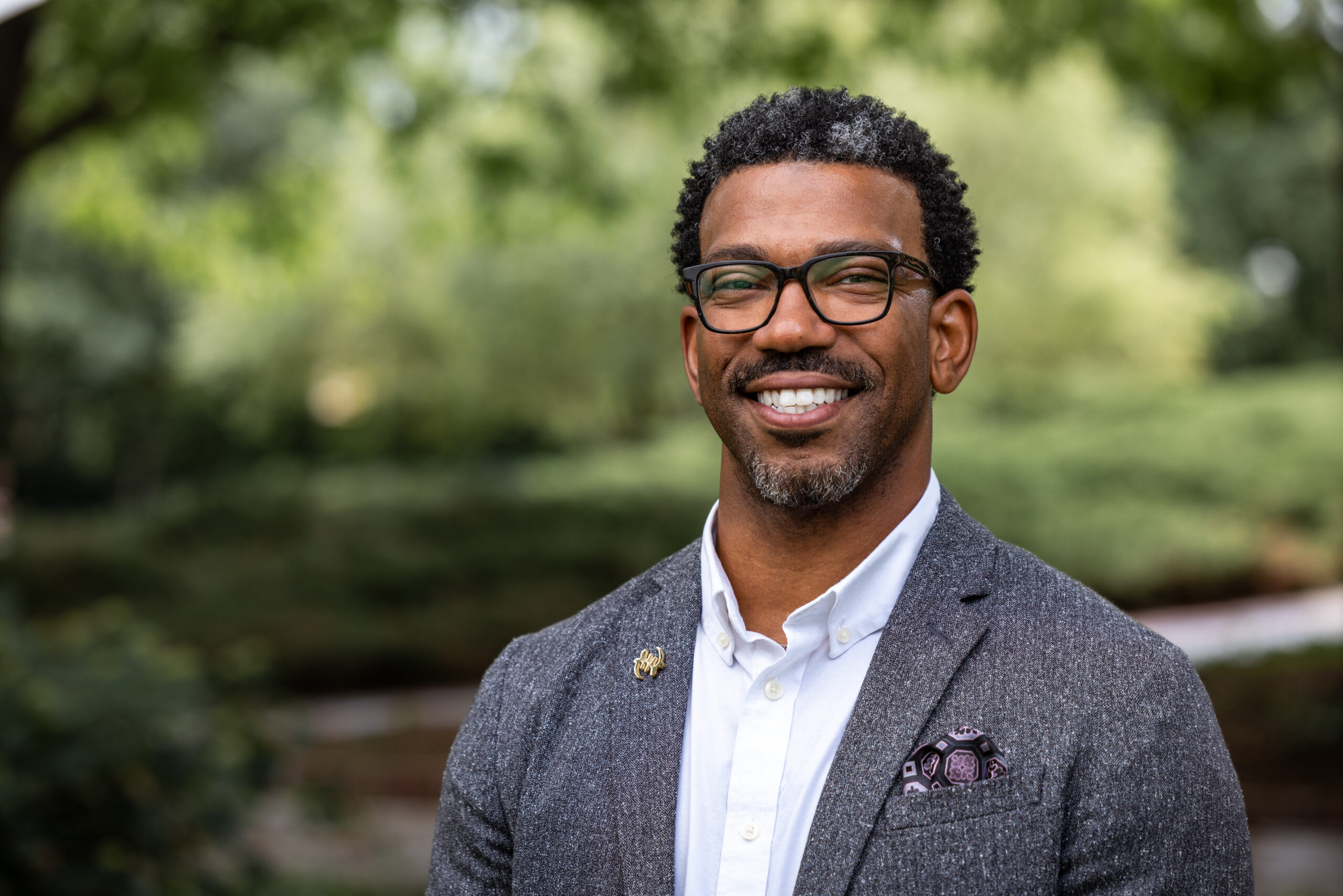
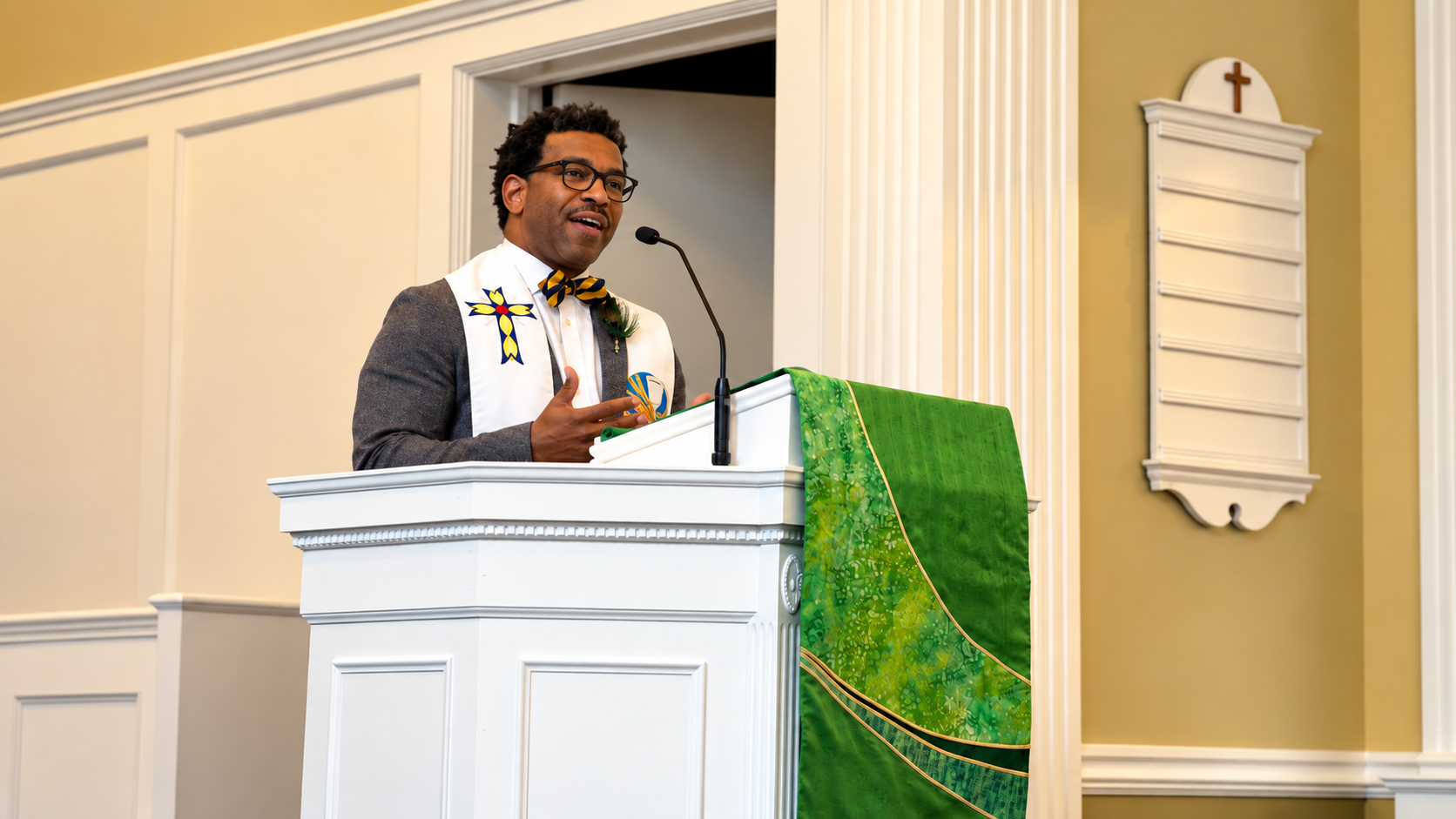
This sermon was originally delivered at the North Park Theological Seminary Fall 2026 Convocation Service on Tuesday, September 15, 2026.
Hello North Park Theological Seminary students, faculty, and staff.
I am grateful to our university President, Mary Surridge, ECC Preside Tammy Swanson-Drehiem , Seminary interim dean, Dr. Mary Miller and our illustrious Dean of faculty, Dr. Hauna Ondrey for their leadership of our academic and formational community. It is an honor to be here as an NPTS graduate, ECC pastor, and director of the Weborg Center for Spiritual Direction.
The title for the message is Theology in Service Towards the Living God.
There is real, genuine excitement in what we’re about to do this year through study, research, and rigorous scholarship.
You’re about to sit with texts that have outlived empires, wrestle with questions the church has never fully settled, and come out the other side more equipped to serve God’s people. I want to celebrate this moment before I complicate it.
The truth of the matter is that seminaries are changing.
In 2005, American seminaries enrolled just over 32,000 students in the Master of Divinity — the classic, three-year degree most people still mean when they say “seminary.” Today that number sits at 24,633 — the lowest it’s been since 1991.1
Now, before anyone panics, theological education as a whole hasn’t collapsed. What’s shifted is the path towards degree seekers: shorter programs, online study, and bivocational routes into ministry are changing the shape of seminary education itself.
So what happened?
Allow me to suggest something before you spend a year trying to answer that question. However you found your way into this 135 year history — whether three-year residential program, hybrid track, or distant learning cohort — you have one motivation that doesn’t change with the format.
You are here to be formed into the image of Christ, and to learn how to help others be formed into that image also. Everything else is a delivery method.
So here’s the danger that any delivery method can hide: Theological training is necessary, but it is not sufficient alone.
Orthodoxy, right belief, has to become orthopraxy, right living, and right living must become orthopathy, a rightly ordered heart. If it doesn’t, it curdles into stale milk and the kind of irrelevance that Jesus names in his encounters with trained theologians called Pharisees.
I can’t take credit for the phrase “Theology in service toward the living God.” It isn’t mine. It’s a hat tip to Dr. C. John Weborg who taught theology on this campus for nearly thirty years, and to the tradition he gave his life to studying: Pietism.
Philipp Jacob Spener, writing in 1675, argued for what he called praxis pietatis (pee-eh-TAH-tees) — a piety that has to be practiced, not merely believed.
Study without piety, Spener said, is worthless. That’s not because study doesn’t matter. It’s because study was never meant to be the final destination. It was always meant to be the road that leads you to the living God, rather than a museum you build to house him.
John 5:39–40 (NRSV)
39 “You search the scriptures because you think that in them you have eternal life, and it is they that testify on my behalf. 40 Yet you refuse to come to me to have life.
Some of you have people in your life who call this place the “cemetery” instead of the seminary — where students go to bury their faith.
I was ordained in Baptist Church in 2000, but by that time I’d been preaching for nearly ten years. In that season of ministry I developed a hunger for theological training and spiritual formation. My pastor in VA said it wasn’t necessary. My pastor in OH said it wouldn’t prepare me to plant a church. Surprisingly, neither was right! A decade later I completed the MACF here at NPTS.
That fear of losing your faith isn’t something to overlook.
People who have counseled would-be seminarians have watched rigorous study calcify someone’s heart and cloud their discernment.
Listen to what Jesus is and isn’t saying in this text.
He doesn’t say the Pharisees searched too much, or studied the wrong thing, or wasted their time in the scrolls. He says the searching was real, and rightly aimed. They were looking for exactly the right thing – eternal life – in exactly the right place – the holy text.
However, real and honest searching even rightly aimed still wasn’t enough. Their failure was relational, not academic.
That’s the temptation of a place like this: not that we’ll stop believing, but that we’ll let this become a professional competency before it ever becomes a spiritual practice. The concern is that we’ll graduate students who are fluent in exegesis and hermeneutics and still, somehow, a stranger to the One who is the object of study and proclamation.
That is the exact kind of failure that a life of theology in service toward the living God was meant to correct.
Hear this first invitation: study with all your might. Learn the languages, history and ethics until you can hear the words sing, not just inform.
Read the theologians who wrestled with these questions before you, because pietism at its best was never anti-intellectual. The invitation is not to study less. It’s to study all the way through the text until you find the savior who is waiting on you.
Have you ever ordered a rideshare and watched the app hand you everything? The driver’s name. Their photo. The make and model of the car. The license plate, down to the letter. And still, when that car pulls up, you don’t just get in. You check. You look at the face through the windshield, because information is not verification. You have to see the real thing before you trust it with your life.
Here’s the question for a room full of seminarians: How do we fall into the trap the Pharisees did?
We construct an image of Jesus — his history, his character, his words — and we defend that image with the very scripture that was meant to reveal who he actually is, not confirm who we’ve already decided he is. And the construction can get so complete, so well-researched, so well-footnoted, that it replaces our capacity to see Christ standing in front of us.
Howard Thurman had a phrase for the alternative posture.
He said there is something in every one of us that waits and listens for the sound of the genuine in ourselves and it is the only true guide we will ever have. Not the loudest voice. Not the most cited voice. The genuine one, which you cannot hear if you never go still.
The Pharisees had every external qualification, and they still could not recognize Jesus. It wasn’t because they lacked information. It was because they were not still enough to let the eternal Christ stand in for the temporal one they imagined.
Verse 40 sounds like a diagnosis, but listen carefully like a spiritual director and notice it’s an invitation. “You refuse to come to me,” is Jesus leaving the door open.
Dr. Weborg once said something in an essay on pietism that people communicate themselves2. Not information about themselves, but themselves in whole. You see, a text can tell you facts about a person, but a person can show you who they are.
Weborg spent decades building into this seminary a tradition of spiritual formation and direction. That’s why North Park doesn’t stop at teaching you the text.
- Prayer is practiced, not just studied
- Scripture is prayed, not just parsed
- A community is formed, not just charged.
Here is your second invitation: Let this year form you, not just inform you.
Sit in spiritual direction.
Keep a rule of prayer.
Let someone else see your soul, the way you’re being trained to see everyone else’s.
Shameless plug: become a certified Spiritual Director through the Weborg Center.
Formation is not the soft elective next to the real work of theology. It is the discipline that keeps your searching aimed at a person and not just a page.
Do you know what’s waiting on the other side of that encounter?
Presence.
It’s not applause, or a platform.
The Hebrew scriptures promise that everyone who diligently seeks God, will find their reward in Christ3. You will be rewarded with being known, present, and alive in a way no transcript can certify. We are not offering a lesser prize than scholarship. It is the only prize scholarship was meant to obtain.
So here is the invitation: Let your searching this year be the kind that ends in an encounter, not a credential.
Jesus is not asking you to master Him.
He’s asking you to come to Him so you can be like him.
Mission Friends, you can graduate with honors and still miss Him. You can preach three points and a poem and still miss Him. You can parse the Greek, quote the Hebrew, footnote the Desert Fathers and Mothers — and still miss Him.
Because searching is never the commencement.
Coming to Jesus is always the beginning and the end.
The Pharisees missed the man standing in front of them because they weren’t looking for a suffering servant like the one in Isaiah who had no form, no majesty, nothing in his appearance to draw us to him.
They missed the man standing in front of them because his glory and his kingship weren’t what they were watching for.
He wasn’t militaristic like David. He wasn’t flamboyant like Solomon. He wasn’t divisive like Rehoboam. He wasn’t oppressive like Herod. He wasn’t idolatrous like any Roman emperor.
He was and is the Son of God, the Lamb who came to take away the sin of the world, and empower his believers to be the kingdom on earth as it is in heaven!
Beloved, come to seminary to be changed, transformed and renewed.
North Park Thelogial Seminary has world-class professors!
But don’t attend class just be wowed. Come to Jesus to be amazed by his wonder.
Don’t come to Community Worship just to learn the liturgy, but come to Christ to be formed in his image.
Don’t come to these hallowed halls just to fill your mind with facts, but come to fill your life with The Holy Spirit.
The Magi were searching.
They were searching their own texts, studying the signs, looking to understand what God might be doing in the world. And somewhere in their searching, they discerned that a Savior had been born.
So they went west.
They followed what they had seen. They followed what they had learned. They followed the light they had been given.
Keep searching.
When they arrived in the Holy City, they didn’t know exactly where to go. So they asked for directions.
They had traveled a long way, but they were willing to admit, “We don’t know where He is.”
And someone pointed them toward Bethlehem.
Keep searching.
When they arrived, they didn’t find what they might have expected.
They found a young mother.
They found a confused father.
They found a family trying to make sense of what God was doing in their midst.
But the unexpectedness of the scene didn’t stop them.
Keep searching.
They kept looking.
And eventually, they found a little boy.
Not a king sitting on a throne.
Not surrounded by soldiers.
Not dressed in royal garments.
Just a child.
Keep searching.
And when they looked a little closer, they found a poor family.
Nothing about the scene looked particularly powerful.
Nothing about it announced, “Here is the Savior of the world.”
But they had learned something in their searching:
God does not always look like what we expected to find.
And they found what they had been searching for.
They found the Savior.
The Savior of the world.
So maybe that’s the invitation for us:
Keep searching.
Keep seeking.
Keep asking questions.
Keep following the light you’ve been given.
Keep moving toward God even when you don’t have all the answers.
Because sometimes the search doesn’t lead you to what you expected.
Sometimes you find a young mother and a confused father.
Sometimes you find a little boy.
Sometimes you find a poor family.
And sometimes, right there in the middle of what looks ordinary, unexpected, and unimpressive. Beloved, you find Jesus.
But hear the best part of what happened after they found him. They didn’t go home the way they came. The Gospel of Matthew says they left for their own country by another road.
Hear me now. If you truly find him this year, you will not leave the way you came either. Not because the road changed, but because you did.
So search the scriptures and find him. Give him your life. And leave changed.
Amen.
SHARE WITH FRIENDS