


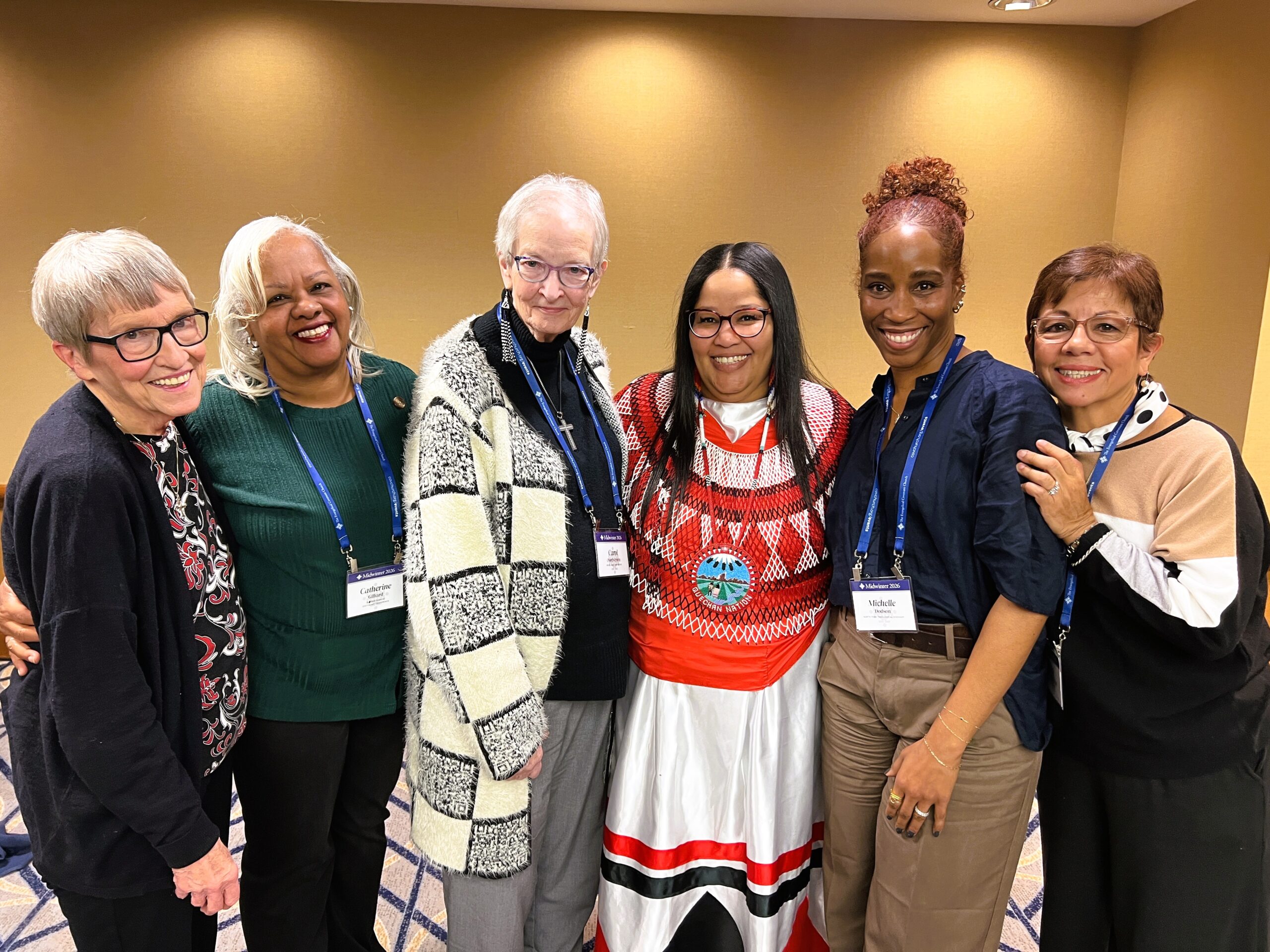
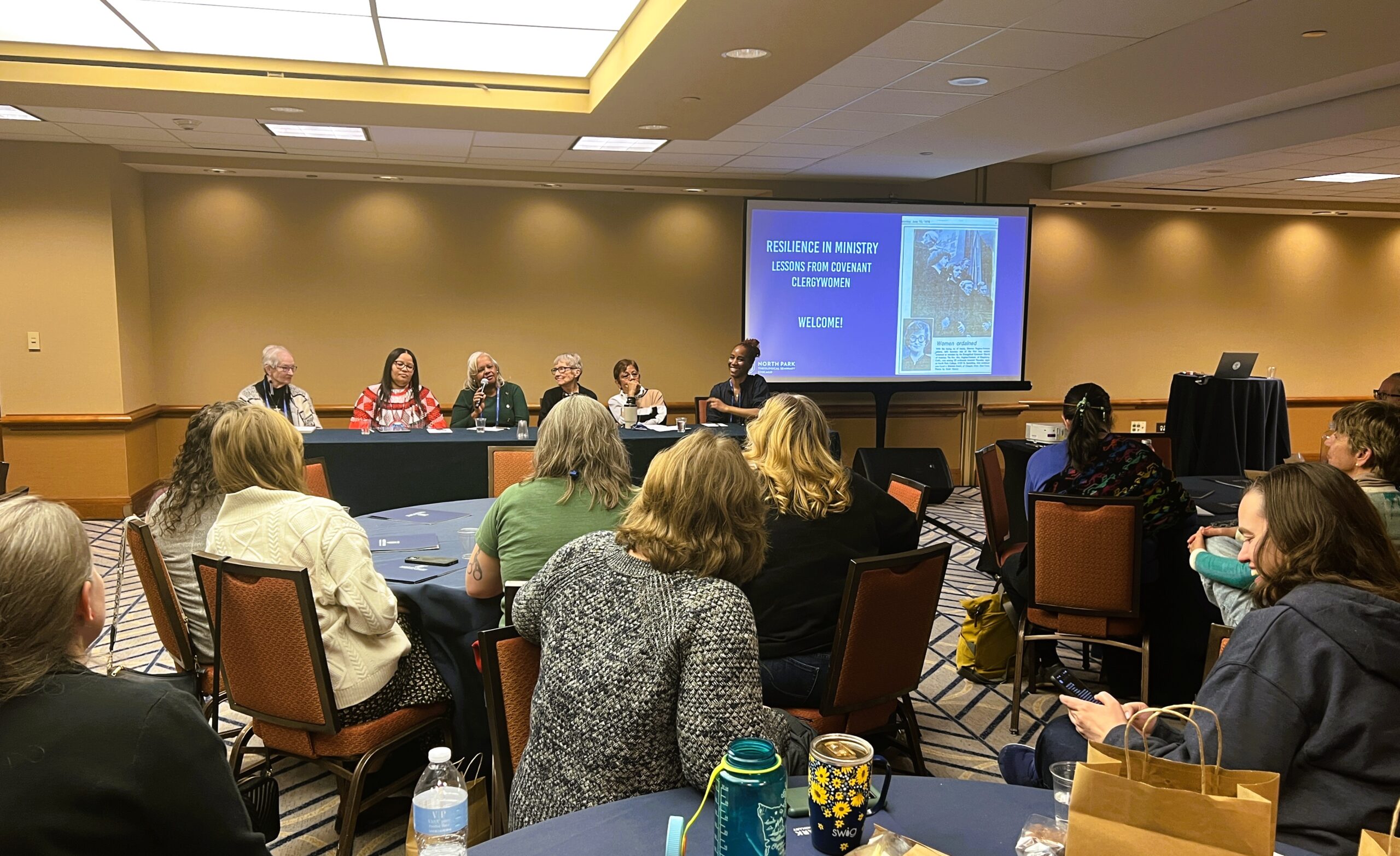
June 2026 will mark the fifty-year anniversary of the Evangelical Covenant Church’s vote to “go on record favoring the ordination of women.” In honor of this significant milestone, North Park Theological Seminary sponsored a lunch panel during the 2026 Midwinter Conference in Chicago, IL, inviting five pioneering Covenant clergywomen to share their testimonies of resilience and perseverance in ministry.
Moderated by Dr. Michelle Dodson, who authored the latest decadal study on Covenant clergywomen, the panel discussion featured Rev. Carol Shimmin Nordstrom, one of the first two women to be ordained in the Covenant in 1978, along with Sherron Hughes-Tremper; Rev. Evelyn Johnson, the first woman to serve as a conference superintendent; Rev. Tamara Ravelo, the first Indigenous woman to be ordained in the Covenant and the current president of the Indigenous Ministers’ Association (IMA); Rev. Dr. Catherine Gilliard, the first female president of the African American Ministers’ Association (AAMA), first Black president of the Covenant ministerium, Covenant Executive Board, Advocates for Covenant Clergy Women (ACCW), and first African American woman conference superintendent; and Rev. Pia Restrepo, longtime Covenant missionary and church-planter who was the first woman to preach in an evangelical partner church in Spain.
Dr. Dodson opened the discussion by sharing that the five decadal studies show increasing satisfaction among clergywomen in the ECC but that significant gaps remain. “Each of you is a pioneer and barrier-breaker,” she affirmed the panelists. “How did you navigate the challenges that come with being a first? What encouraged and sustained you? What enabled you to persevere?”
Despite their diverse backgrounds and experience, all the panelists stressed the importance of supportive community as they pursued God’s call, whether that was a spouse, parent, mentor, small group, co-pastor, or otherwise. Each woman lamented how few male colleagues had supported them but celebrated the ones who, “ahead of their time,” had embraced and affirmed the clergywomen’s call in both word and deed, publicly and privately.
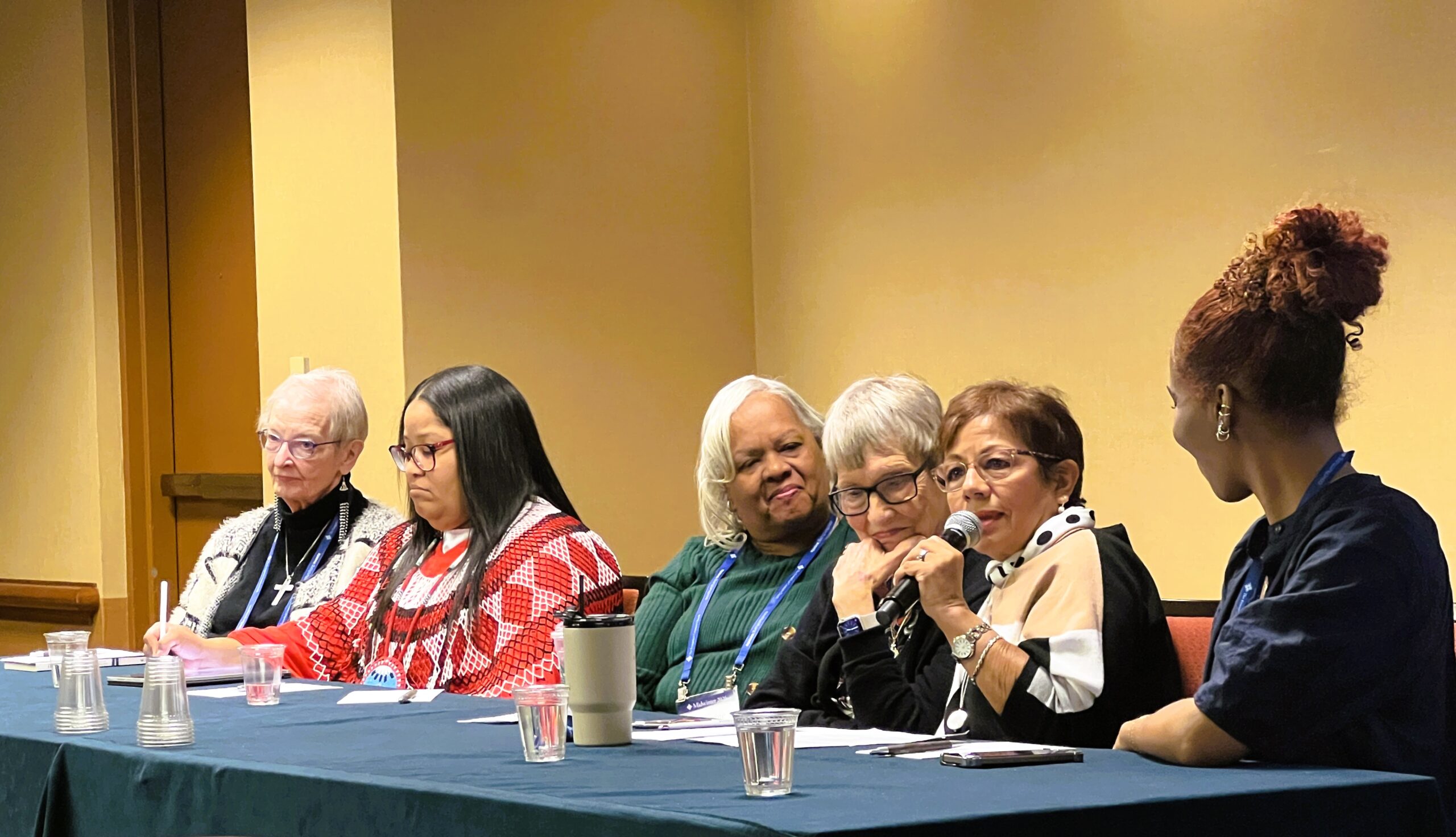
Restrepo and Gilliard shared that resilience often requires both letting go and allowing oneself to be formed by the pain of rejection. “I’m learning to live in a way that I only desire to be obedient to what I am called to,” explained Dr. Gilliard. Rev. Restrepo memorably framed resilience as “giving up,” sharing aspects of her identity and desires she felt she had to let go in the process of obeying God’s call.
Equally important, however, was a holy and humble confidence in God’s calling and provision—and the refusal to assimilate if it meant sacrificing God’s unique gifting and formation.
“I’m not a person who stood and waited for permission,” Rev. Nordstrom laughed. “If no one loves you, create the demand! I went ahead and kept taking steps forward in faith, even when I was still uncertain it was where God wanted me.”
“If I prayed it through and God was saying yes, then I could say yes, knowing God would enable me to do the things God was calling me to,” Rev. Johnson added, and “Do it afraid,” Rev. Ravelo challenged listeners. “Be willing to give your ‘yes’ anyway.”
“The only answer to God is ‘yes,’” Dr. Gilliard agreed, “and you must be open to all the inconveniences of saying ‘yes.’ God’s call is never going to come at a good time, and it may never feel like there’s margin in your life for what God is calling you to or for what you need. You still need to say yes.”
Following Dr. Dodson’s opening question, participants—primarily women—brought their own questions to the panel, inquiring after self- and community-care practices, advice and challenges for those pursuing a path to ordination or beginning their ministry, and stories of standing in God’s calling despite resistance or setbacks.
Rev. Johnson and Dr. Gilliard emphasized the importance of spiritual rootedness: finding models in Scripture for different seasons of life and ministry, and prioritizing time in prayer. Rev. Restrepo advocated for “finding the Hagars”: identifying the marginalized, then any mission opportunities that can lead to mutual empowerment and healing.
“Trauma is not the end of the story,” Rev. Ravelo said. “I allow myself to feel what I feel, but I’m mindful not to stay there, not to rehearse it. What story do I want to tell, knowing that this is just a chapter? I’m going to see to the end and picture the outcome the Holy Spirit is speaking over me.”
Owning their stories, and through them being able to tell the stories of Scripture, had empowered many of the panelists and led to ministerial flourishing. “Study the women in Scripture, but not just the women,” Rev. Johnson urged. “Abraham went out without knowing. We’re constantly, daily going into the unknown, and we must have faith.”
SHARE WITH FRIENDS