


Surrounded by a Cloud of Witnesses: Reflecting on “Hope in the Borderlands”
March 27, 2026

Lama Htoi San Lu

I was born in Burma/Myanmar during a time marked by repeated military repression.1Christina Fink, Living Silence in Burma: Surviving Under Military Rule (Zed Books, 2009). The civil war between the Myanmar military and ethnic minorities began long before I was born and continues to this day. Even before the global pandemic ended, yet another coup in February 2021 seized the country, pulling it into deeper crisis. The region where I grew up, controlled by a military dictatorial regime, became a battlefield—demonstrating that the notion of “permacrisis” is not new for those living in the margins. In fact, permacrisis is an everyday experience for many.
This ongoing reality made North Park Theological Seminary’s Spring 2026 Public Theology lecture, “Resilience in an Age of Permacrisis: Hope in the Borderlands,” with Dr. Russell Jeung and Dr. Daisy Machado, especially powerful. Dr. Jeung shared three resources for resilience drawn from the Asian-American community during the pandemic, while Dr. Machado explored the concept of the Latinx borderlands and the role of lived religion as a source of hope for the community. Although they spoke from different contextual backgrounds, what they shared highlighted the deep historical and experiential connections between their two communities.
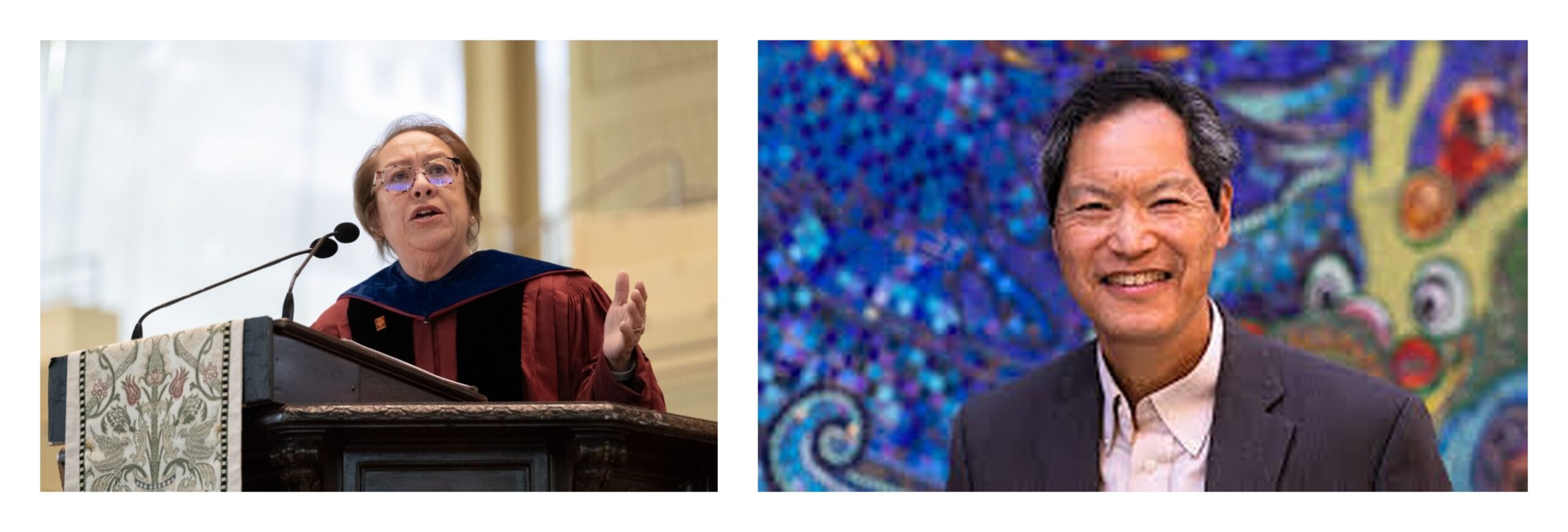
These overlapping crises—a global pandemic, racial violence against Black and Brown bodies, hatred toward Asian/Asian American and Pacific Islander communities,2Stop AAPI Hate https://stopaapihate.org/our-origins/ and militarized violence against ordinary people in Myanmar—are deeply interconnected. Drawing from Suzanne Obler, Dr. Machado described “borderlands” as liminal spaces “of constant motion for identity, language, economic, religious belief, and politics.” Clearly, more and more people in the contemporary world are finding themselves in the borderlands.
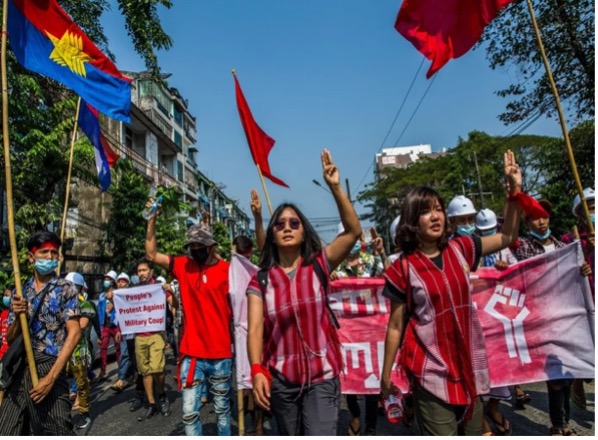
Under a dictatorial regime, silence becomes a means of survival. Unlike the dictum “see something, say something,” speaking out in my context could have life-or-death consequences. Yet, despite these dangers, ethnic minority women like Esther Ze Naw Bamvo and Ei Thinzar Maung courageously led peaceful anti-coup protests just days after the 2021 military takeover; thousands of university students joined, fully aware of the risks.3MiMi Aye, “Esther Ze Naw Bamvo and Ei Thinzar Maung: the 100 Most Influential People of 2021,” Time, September 15, 2021, accessed March 9, 2026, https://time.com/collections/100-most-influential-people-2021/6095960/esther-ze-naw-bamvo-ei-thinzar-maung/ Their courage and hope for democracy, justice, and freedom outweighed the fear of living in silence under the military regime, driving them to take action on the street despite the risks.
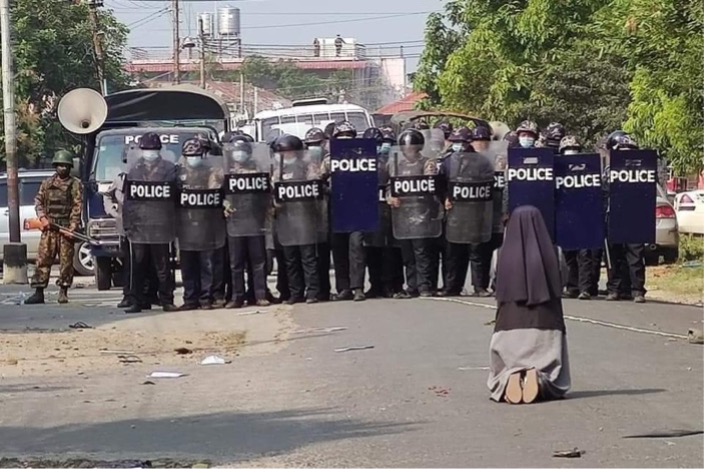
In Myitkyina, Kachin State, Catholic Sister Ann Rose Nu Tawng stood between military authorities and pro-democracy protesters, kneeling to shield young people and civilians from violence.4Loup Besmond De Senneville, “The Courage Witness of Sister Rose in Myanmar,” in Global Sister Report, May 17, 2021, accessed March 9, 2026, https://www.globalsistersreport.org/spirituality/courageous-witness-sister-rose-myanmar Her action, rooted in her faith and her own experience as a displaced person traumatized by military violence, was an embodiment of “lived religion”—a faith that protects people and advocates for peace and reconciliation in the face of ongoing militarized violence. When Dr. Daisy Machado shared the story of Mama Leoncia Rosado Rousseau (1912–2006), who served people at the margins in New York, I was reminded of Sister Nu Tawng’s courage and faith. Their lived religious praxis—“taking the church to the streets”—shows faith enacted in response to social and political violence. Their expression of Christian faith transcends geopolitical boundaries and the borders of nations and ethnicities, but it witnesses to the gospel.
One crucial realization from Dr. Jeung and Dr. Machado’s conversation is the knowledge that marginalized communities face rejection and violence over and over again—racism, sexism, economic exploitation, xenophobia, and militarized brutality. However, whether their names are remembered or not, these people’s stories of faith matter. This resonates deeply with Christian theologian Kwok Pui-lan’s commitment to tell, carry, remember, and embody these stories: “Hope lies in remembering that in the long history of anti-colonial and postcolonial struggles for justice, there are Christians and people of faith who have stood up from the margins, and that the subaltern cannot be easily silenced—they are like a great cloud of witnesses surrounding us (Heb. 12:1).”5Kwok Pui-Lan, Postcolonial Politics and Theology: Unraveling Empire for a Global World (Louisville, KY: Westminster John Knox Press, 2021), 202. She further traces the story of Jesus who resisted the Roman Empire and stood in solidarity with the poor and the marginalized.6Ibid, 202.
Therefore, storytelling is where “hope in the borderlands” emerges: a hope that requires critical awareness of broader social and political systems of domination and the recognition that personal flourishing is tied to the community’s collective well-being. Drawing from Asian American experiences, Dr. Jeung explains how resilience and hope arise from a consciousness of both internalized oppression and the will to resist it. Hope, in this context, is a refusal to accept injustice towards the most vulnerable persons in the community, and a commitment to solidarity in the struggle for justice and equality, as modeled by Rev. Jee Gam and the Women of Cameron House in the nineteenth century.7Caleb Hui and Sam Chao, “Sanctury Then and Now: What 19th-Century Chinese Christians Teach Us About Protecting Immigrants Today,” Christian For Social Action, 14 January, 2026, accessed March 9, 2026, https://christiansforsocialaction.org/resource/christian-sanctuary-immigrants-history/ Their stories embody what Kwok defines as “postcolonial hope,” a praxis—not a dream, not passive waiting—in which spirituality and materiality are inseparably intertwined for the work of justice-seeking and justice-making.8Kwok, Postcolonial Politics and Theology, 202.
Where does my hope come from amid hopeless situations? My hope comes from remembering and telling the stories of ordinary people and their faithful responses, large and small, in the face of perpetual silencing and erasure. It comes from remembering that we are surrounded by a cloud of witnesses. For communities of Christian faith, telling these stories generates hope and invites others into the ongoing struggle for justice, freedom, and liberation.
Endnotes
- 1Christina Fink, Living Silence in Burma: Surviving Under Military Rule (Zed Books, 2009). ↩︎
- 2Stop AAPI Hate https://stopaapihate.org/our-origins/ ↩︎
- 3MiMi Aye, “Esther Ze Naw Bamvo and Ei Thinzar Maung: the 100 Most Influential People of 2021,” Time, September 15, 2021, accessed March 9, 2026, https://time.com/collections/100-most-influential-people-2021/6095960/esther-ze-naw-bamvo-ei-thinzar-maung/ ↩︎
- 4Loup Besmond De Senneville, “The Courage Witness of Sister Rose in Myanmar,” in Global Sister Report, May 17, 2021, accessed March 9, 2026, https://www.globalsistersreport.org/spirituality/courageous-witness-sister-rose-myanmar ↩︎
- 5Kwok Pui-Lan, Postcolonial Politics and Theology: Unraveling Empire for a Global World (Louisville, KY: Westminster John Knox Press, 2021), 202. ↩︎
- 6Ibid, 202. ↩︎
- 7Caleb Hui and Sam Chao, “Sanctury Then and Now: What 19th-Century Chinese Christians Teach Us About Protecting Immigrants Today,” Christian For Social Action, 14 January, 2026, accessed March 9, 2026, https://christiansforsocialaction.org/resource/christian-sanctuary-immigrants-history/ ↩︎
- 8Kwok, Postcolonial Politics and Theology, 202. ↩︎
SHARE WITH FRIENDS