


Hoy por Ti, Mañana por Mi: A Conversation with Pastor Tomás Sanabria
November 27, 2025

Cheryl Lynn Cain

NPTS alum and Covenant pastor Tomás Sanabria and his congregation of La Iglesia del Pacto Evangélico de Albany Park recently garnered national attention when one of the congregants was detained by federal agents in Chicago’s Millennium Park. On October 30, I sat down with Pastor Sanabria to learn more about what it looks like to pastor a Latina congregation in this moment, and how the broader church and denomination can stand in solidarity with our immigrant neighbors.
Cheryl Lynn Alexander-Bermúdez (CLAB): Thank you, Pastor Tomás, for agreeing to this conversation today. When you came to North Park Seminary last spring to lead our community worship service, I was reminded of when Florence Towne spoke from that same pulpit in 1940, sharing with seminarians what was going on in her neighborhood for families of color. She even prompted seminary folks like Doug and Carolyn Cedarleaf to become involved with a local ministry, and to learn how to practice solidarity in that time and place.
You made a similar call, highlighted by Superintendent Danny Martinez through a recent invitation to solidarity with folks in your church affected by the recent ICE and Border Patrol raids. Perhaps we could start with some background to help us get to know you, your ministry, and your congregation. I believe your congregation includes members from fourteen different Latin American countries, is that correct? What are some of the blessings and challenges of pastoring such a diverse body?
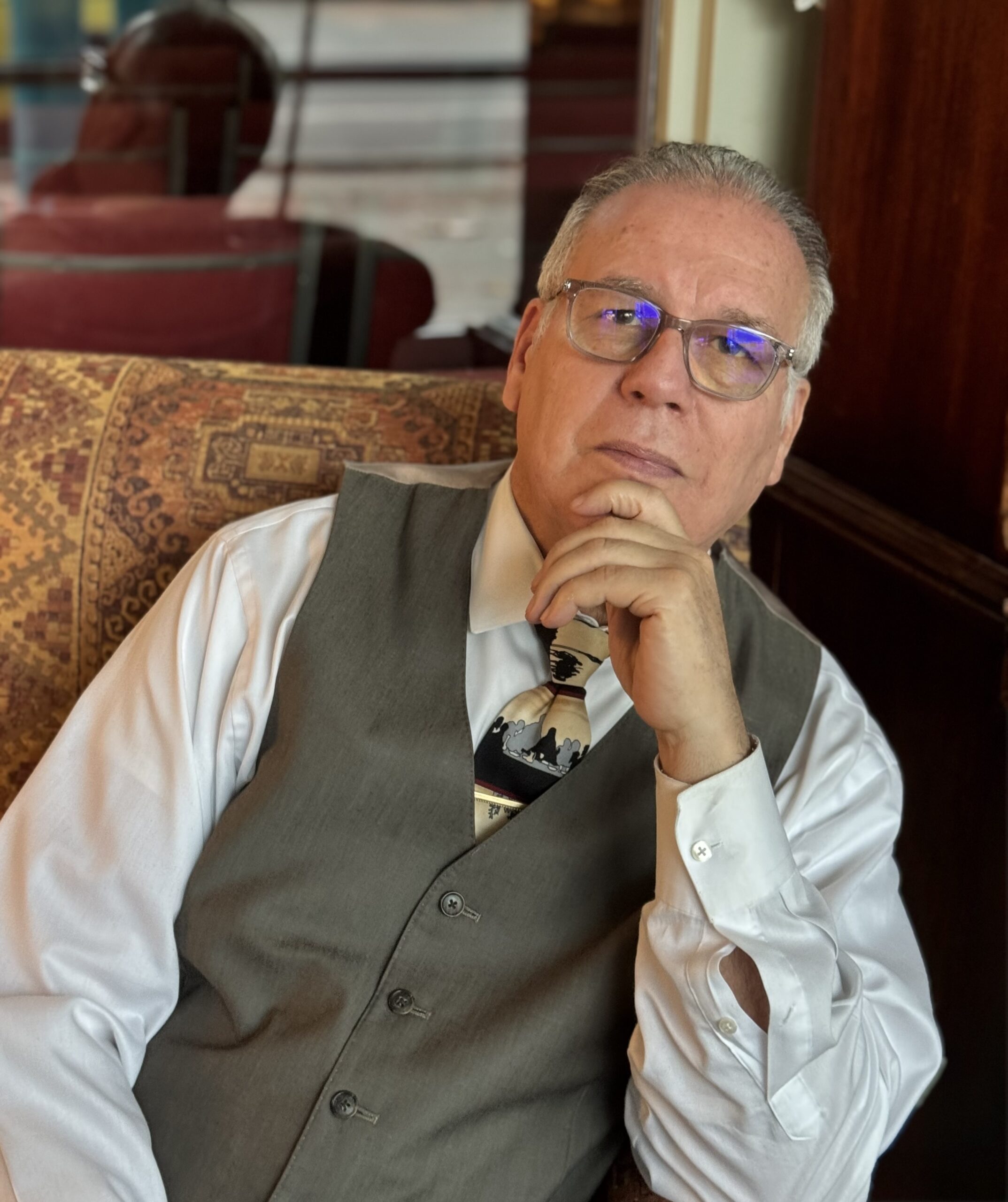
Pastor Sanabria (PS): Yes, more than half of the Latin American countries are represented in our congregation. With fourteen different nationalities the challenge is always: how do you “do” church within a new society? How do you help people evolve into a church that not only looks toward our own needs but also looks outward to the needs of the community? We have learned to have patience with individuals who think differently, because that is what church is also about: discipling people so they grow in faith and can help others grow as well. As a congregational church and denomination, we want everyone to have a part, not only in making decisions but in providing services to the community.
CLAB: You mentioned nurturing a kind of discipleship that considers both the needs inside the church and the needs of the community outside the church. What does that look like during a typical week?
PS: As a pastor, I am active Monday through Sunday. And I truly believe that the position of “pastor” is not a job; it’s a ministry of love. For instance, I am a solo pastor, and I am not married, so I spend a lot of time thinking about and focusing on the Iglesia. For nearly fourteen years, I’ve been at this church putting my shoulder to the work, and I carry this cross with gladness. That said, I try to have personal time each day, early in the morning. I try to keep my thoughts centered on the Lord. I am always walking and talking to God. People may think I’m talking to myself, but I’m just praying!
Throughout the week, I prepare for preaching and for our Saturday Bible studies by studying the word, reading commentaries, and remaining attentive to revelation. I’m one of the few pastors who writes out their sermons so I can distribute them to congregants for personal study during the week. I also meet with congregants for counseling, planning, and praying.
I also have a ministry at the four-story building I’ve owned since 1989. Throughout the years I’ve had different tenants, but when the Venezuelan wave of immigrants came several years ago, they began knocking on the church door. By that time, I had already prepared the top two floors of my building to rent through Airbnb. My original intention was to rent these properties to pastors who were spending a few days in the city. However, I began filling those rooms with newly arrived immigrants in need of housing. At one point, I had twenty-one immigrants staying in the top two floors. Throughout the week, I often spend time with these tenants, either in fellowship or in helping as they get oriented to a new country, city, and culture.
Recently, because of the ICE raids, I’ve connected with a few community organizations. I have been surprised and encouraged by the community’s response to a recent arrest, how they have rallied to help and provide resources. It is always my hope that the church and community collaborate.
CLAB: This is the ICE raid that led to the detention of one of your church families in Millennium Park, and which gained public attention. Could you share more about the situation and how the Iglesia has responded spiritually, communally, and practically?
PS: That Sunday, there was an influx of National Guard and Border Patrol officers into the downtown Chicago area. The weather was nice, and the family wanted to go to Millennium Park to enjoy some time playing together. That’s where it happened.
After service, I was still at church when a relative of one of our church members called to tell me that Naomi Chavez, her husband, and her children had been detained. After that, a congregant called to let me know that she needed to find documents at Naomi’s apartment to help the family. My pastoral instincts kicked in, and I went with this congregant and the relative to Naomi and her family’s home. As we searched for the documents, I continued to receive phone calls from church members asking, “Did you hear about Naomi Chavez and her family?”
On Monday, I began getting calls from investigative reporters asking, “Are you Pastor Tomás?” I asked them how they’d gotten my name, and they asked, “Is this your church?” On the one hand, I felt I needed to take control of the narrative, otherwise they were going to put our congregation all over the news. On the other hand, I knew that the first question my congregants would ask was, “Why did you go on the news and bring more attention to us?”
As I prayed in my heart, I remembered the Hispanic pastors and other pastors on the South Side who’d been involved in press conferences and demonstrations regarding the immigration raids. I told the reporters that when people hear from a pastor, they need to hear Jeremiah 33:3: “Call upon me and I will respond to you, and I will show you great and wonderful things and even those things that you don’t even think about.” I wanted my congregation to hear that we have a voice in this moment, that even if they can’t raise their voice, I will. It was very important to me that the public hear about the fabric of our community: that there is the news, but there is also the news underneath, and that’s the news I want to talk about. For instance, a mother and father were crying, and young children were hurting. There are now holes in the fabric of the community that need to be mended.
As for the ways the Iglesia has responded, we’ve opened a housing ministry and a clothing pantry. We’ve been speaking about what congregants can do to protect themselves. We have separated private spaces in the church. We’ve identified a retired lawyer who helps with immigration advice; already, she has helped between twenty and twenty-five members of our congregation. Congregants help by sending notifications about nearby ICE activity. I’m constantly receiving text messages saying, “Don’t go here.”
Two or three weeks ago, the congregation was celebrating Pastor’s Appreciation Day, and as I was giving my part of the reflection the entire atmosphere changed in the building. People kept looking back at the door. I had to ask, “What’s going on over there?” To myself, I thought, “I’m giving them one of my best reflections, and they’re not even paying attention!” Then I realized that everyone was seeing the location of ICE agents “blow up” on their apps. That was the day ICE agents came and threw gas bombs on Wilson Avenue, not far from the church. So, once I finished, the congregation saw me step down from the altar and go straight outside. By my actions they knew I went out to protect them. I hope and believe that over the years, my people have come to know me for my advocacy. They have personally seen me advocating for them. One congregant recently testified during the service with tears in her eyes, “I know if I get arrested or my family does, that Pastor will be the first one out there looking for me.”
CLAB: That’s so powerful, thank you for sharing. What do you wish other churches—particularly those who are not immigrant communities—understood about what your congregation is facing right now?
PS: When we look at the Old and New Testaments, we see that for a miracle to occur, there had to be an illness, or an oppression, or a person who was just down and out on their luck. For instance, in the first century, for the word to spread during severe persecution—in the worst of times—the early church had to leave Jerusalem. When they, a church like ours, faced their trial, their faith story began. In other words, revelation comes to people of faith as they experience crisis. Today, as we consider the stories of people who came to this country as essential workers and are now regarded as second-class citizens with no political power, true believers in the true God must show the way through faith to those who may not even go to our churches.
In this time, we have the Latina and immigrant church who are trying to live out this faith. And we have primarily Anglo-American churches looking for ways to help, to do something righteous. One way to bring these stories together is to go out and protest. Be a voice: preach, talk about it, and show support. That’s what President Tammy Swanson-Draheim did when she called and told me that the ECC stood in solidarity with us.
Mutuality is also important. Many people came to visit the Iglesia one Sunday when Superintendent Danny Martinez invited them, and it was powerful for our congregants because they often consider Anglo-Americans, or non-Latinos, as their bosses or supervisors. But to see them in the sanctuary of our church, praising God next to them, and reaching out to them, that was powerful.
So, we must walk in faith together. What more can I say? Walking makes the way!
CLAB: “Walking makes the way.” Wow. Thank you. I also visited the Iglesia that Sunday, when many other churches were present, and you preached some themes and passages to provide hope and faith. What kind of theological themes are sustaining you and your congregation in this season?
PS: Jeremiah 33:3 is one verse that I’ve been using. The broader context is God telling the people of Israel, “Buy land, purchase your land, get yourself ready to return to the land. You’re going to go out in a diaspora, you’re going to be spread out, you’re going to hurt for a while, but things are going to get better. You will return and you will build up community once again.” Though we are going through a period of tribulation, when some have and will be deported, in the long run, pase lo que pase (whatever takes place), God will bring good out of it. This is the word that I’m going to deliver on Sunday, using Romans 8:28. Prophetically, I am looking for a revival at the end of all this. My hope is that at the end of these times, after preaching to the people, what is meant for bad, God will make it for the better. As Christians, we must always pull from a reserve of faith which we often believe we don’t have. However, it is living on that reserve of true faith that will take us through our fears.
CLAB: As you interpret what God is doing in your community right now, is there a particular story that encapsulates it?
PS: I think Naomi Chavez and her family’s story holds the tension of both tribulation and faith. She doesn’t feel like she is wanted. Her husband is still in detention. She continues to wear an ankle bracelet. The future is uncertain, as she is unable to work.
At the same time, while she was in detention, the school community rallied around her. They created a GoFundMe page. Their goal was $1,000, and they collected over $45,000. Even though her husband is still in detention, she’s out and she is with her children. If they do have to leave the country, they now have some money that will help them start over. Since most immigrants try to keep their property in their country or try to send money back to the family, if they were to return, they will be a little better off than when they left.
Their story has also connected us to the surrounding community in new ways, and because it made international news, seen in Mexico and other Latin American countries, many of the Latinos in the community now know about the Iglesia.
We can see it this way because even though nobody wants to or should go through the experience that Naomi and her family had, because of the community of faith and the good will of neighbors, something meant for bad was turned for good.
CLAB: Thank you so much for sharing your time and your stories, Pastor. As we close, how can your North Park community continue to pray for and stand in solidarity with your ministry?
PS: If we continue to build community and do the things we’re already doing, I’m grateful. I hope President Tammy continues speaking. I hope Superintendent Danny keeps advocating for us. I hope that the North Side and South Side Chicago pastors keep plugging in where they can and that people keep looking for ways to say, “I’m with you, Pastor,” or, “Let’s have lunch,” or, “Let’s talk, I see you’re hurting,” or, “Can we come to where you are and support you at the church?”
Know this: it’s not always about money. Money does help, but creating a network is more important. If we can make the connection between us stronger, that will help us all in our walk. I always say, “Hoy por ti, mañana por mi”; “Today for you, tomorrow for me.” In other words, we must help each other during these crises because we never know when we’ll be the ones needing help. I pray that the Latino church continues to help those who have helped us. Amen.
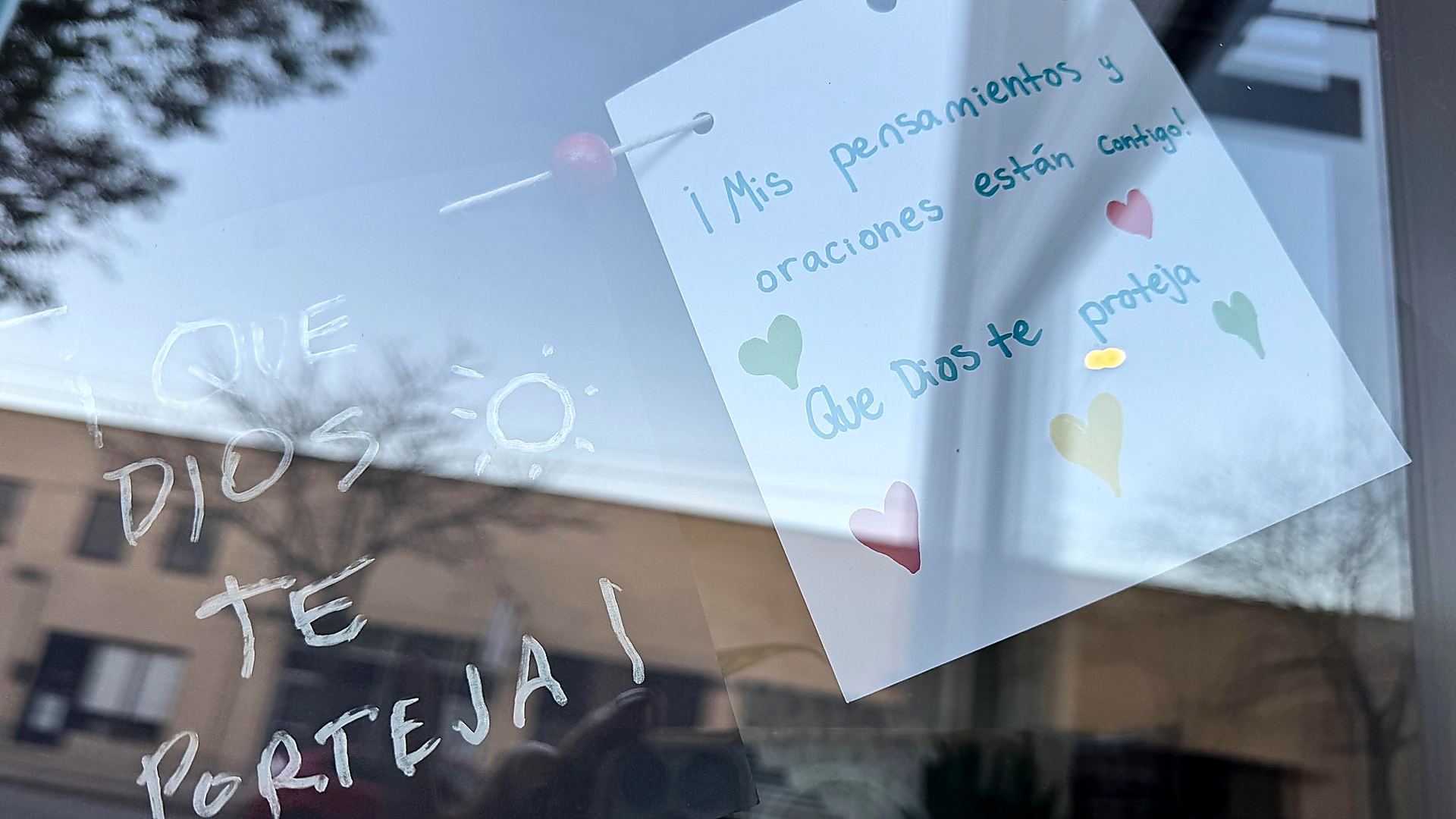
After the interview, one of the church’s lay leaders walked me out. I asked her how she was experiencing this moment and even the recent solidarity service for the family who was detained and separated. She responded that although she recognized how the moment tested her faith, her church also saw an invitation in this moment to the greater American church. Will they put their faith in action and practice solidarity with brothers and sisters in Christ who are suffering? The Iglesia was open to being a place where the answer to that question is worked out.
The following week, a Covenant church located in the northern suburbs came for a listening circle to explore what partnership and solidarity can look like. The chain of prayer cards hanging in the church windows are the embodied exploration of that question.
When I mentioned the congregant’s comment to Pastor Tomás, he smiled as this was the very encouragement he had shared with his congregation a few weeks prior. “This means that that this purpose is not only being heard now but embraced.”
– Cheryl Lynn Alexander-Bermúdez
SHARE WITH FRIENDS