


Romans 13:1–7 and Philippians 3:17–21: Paul’s Call to True Citizenship and to “Gaman”
August 27, 2015

Erik Borggren
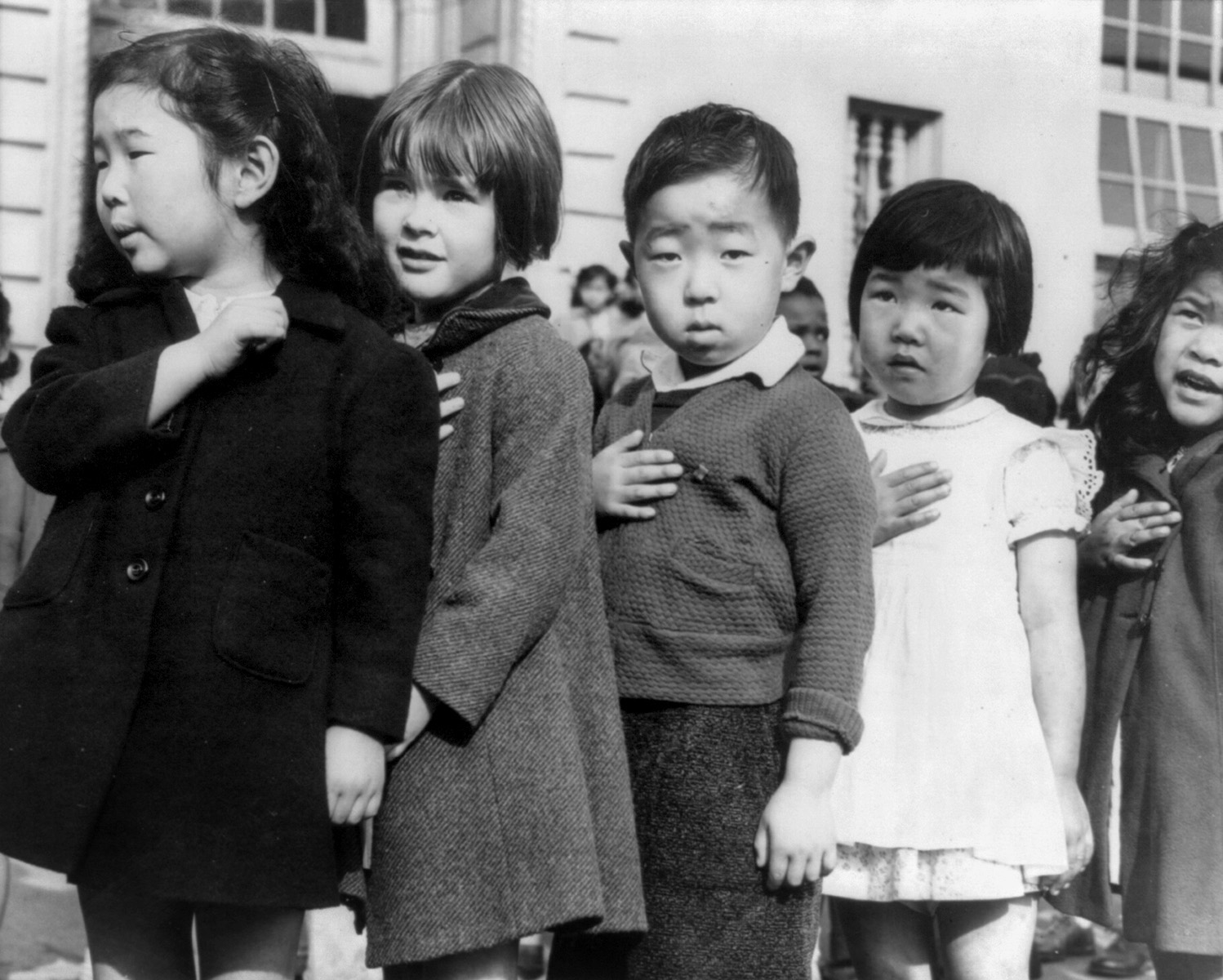
It does not require an election year for questions of church and state to emerge in political and religious discourse. Everyone, it seems, has a differing opinion on same-sex marriage, abortion, immigration, health care, social welfare, taxes, and war. In a properly functioning democracy such discourse, dialogue, and dissent are to be expected, indeed, welcomed. The questions become more complicated, however, when clearly oppressive policies are implemented and unjust wars initiated. How are the Christian and the church to respond to the state in the face of such political realities?
A lack of imagination begets a lack of adequate responses. And such lack of imagination is far too often shaped by narrow and binary approaches to Romans 13:1–7—Paul’s only explicit instruction on the relationship between the church and state. The history of interpretation of Paul’s instruction on the relationship between the churches and the governing authorities in Rome is vast and divided. Unfortunately, this division can easily reduce Paul’s teaching to an “if you’re not for me, you’re against me” political ethic. In other words, when it comes to the proper stance a Christian should hold toward the state, biblical interpreters and political theologians argue either that Paul advocates accommodation, cooperation, and assimilation or that Paul is a counter-imperialist who advocates resistance and disobedience.
In this paper, I will revisit Romans 13:1–7 and Philippians 3:17–21 through the lens of Japanese American internment in American concentration camps. This will involve my entering, as an outsider, into the history, literature, and art of Japanese Americans during World War II, and, in light of their experience, offering a new way to read and interpret these texts. Such a reading reveals the inadequacy of the unimaginative and binary categories of assimilation/resistance and cooperation/disobedience. Rather, through the literature, art, and stories of Japanese Americans, we are able to find a fresh reading of Romans 13:1–7 and Philippians 3:17–21 in which citizenship in heaven enables submission on earth, which in turn empowers hope-filled resistance rooted in love of neighbor.
Japanese-American Internment: History, Literature, Silence, and Art
“You do not belong in this country. You are not an American.”1Eric Paul Fournier, Of Civil Wrongs and Rights: The Fred Korematsu Story, DVD, directed by Eric Paul Fournier (New Video Group, 2006). These words, directed toward Fred Korematsu, a Japanese American living in the United States at the inception of World War II, capture the external racism and the internal struggle for identity endured by one community on the sole basis of race and ethnicity. This racism and fear became institutionalized in the unjust policy of Executive Order 9066, which permitted the internment of Japanese and Japanese Americans in camps throughout the western United States. Signed by President Franklin D. Roosevelt on February 19, 1942, Executive Order 9066 read, “I hereby authorize and direct the Secretary of War, and the Military Commanders, to prescribe military areas in such places and of such extent as he or the appropriate Military Commander may determine, from which any or all persons may be excluded.”2Franklin Roosevelt, “Executive Order 9066,” U.S. National Archives and Records Administration, accessed April 17, 2015, http://www.ourdocuments.gov/doc.php?doc=74&page=transcript. A superficial reading of this order identifies “any or all persons” as anyone deemed a threat to national security. In actuality, the policy was directed toward “alien enemies” of Japanese ancestry and resulted in the imprisonment of nearly 120,000 Japanese and Japanese American individuals, many of whom were American citizens by birth.3Frank M. Yamada, “What Does Manzanar Have to Do with Eden? A Japanese American Interpretation of Genesis 2–3,” in They Were All Together in One Place? Toward Minority Biblical Criticism, eds. Randall C. Bailey, Tat-siong Benny Liew, and Fernando F. Segovia, SBL Semeia Studies 57 (Atlanta: SBL Press, 2009), 103.
In the face of such injustice, how were Japanese Americans to pursue justice, affirm human dignity, and preserve their ethnic identity? These questions created significant divisions within the camps between the various Japanese American communities and generations.4Yamada, “What Does Manzanar Have to Do with Eden?”, 103. Some, such as the Japanese American Citizens League (JACL), opposed any challenge to the military orders and considered the best response for survival to be full cooperation with and commitment to the United States.5Fournier, Of Civil Wrongs and Rights. Others pursued political action and believed resistance was the most appropriate response.6Ibid.
The tension between compliance and disobedience only intensified when the War Relocation Authority (WRA, the civilian agency responsible for detention and relocation) introduced the misguided and ill-advised loyalty registration process in early 1943.7Daisuke Kitigawa, Issei and Nisei: The Internment Years (New York: Seabury, 1967), 115. An effort to prepare Japanese American internees for resettlement, the WRA loyalty program was intended to strengthen American perceptions of Japanese loyalty and to mitigate anti-Japanese racism.8Kitigawa, Issei and Nisei, 119. The loyalty program consisted of two parts: (1) a questionnaire directed toward Issei (first-generation) and Nisei (second-generation) men and women to record each person’s attitude toward the United States and (2) the planned creation of an all-Nisei combat team to fight in Europe.9Ibid., 116. Questions 27 and 28 on one questionnaire asked, “Are you willing to serve in the armed forces of the United States on combat duty, wherever ordered?” “Will you swear unqualified allegiance to the United States of America and forswear any form of allegiance or obedience to the Japanese emperor, or any other foreign government, power, or organization?”10Ronald Takaki, Strangers from a Different Shore: A History of Asian Americans, rev. ed. (New York: Little, Brown and Company, 1998), 397. Kitigawa records Question 28 as two separate questions; many Issei could not answer “yes” to forswearing allegiance to the emperor while denied the right to naturalize, which would render them “a people without a country” (Kitigawa, Issei and Nisei, 117).
Among the Issei, the questionnaire and registration process were met with great resistance and, ultimately, silence (cf. n. 9). For the Nisei, however, there emerged essentially two ways to preserve their ethnic identity. One option was to be a “no-no boy” and refuse service in the United States Armed Forces—due to the denial of their rights as citizens—and forswear any allegiance to Japan, to which they had no official citizenry relationship.11Fumitaka Matsuoka, “Creating Community Amidst the Memories of Historic Injuries,” in Realizing the America of Our Hearts: Theological Voices of Asian Americans, eds. Fumitaka Matsuoka and Eleazar S. Fernandez (St. Louis: Chalice, 2003), 35. The second option was to prove their loyalty to the United States through valiant service in the military.12Matsuoka, “Creating Community,” 36. The all-Nisei 100th Infantry Battalion and 442nd Regimental Combat Team earned the most distinguished medals in U.S. military history. Those who refused military service were eventually prosecuted as draft resisters, convicted of draft evasion, and sentenced to three years in federal prison.13Greg Robinson, A Tragedy of Democracy: Japanese Confinement in North America (New York: Columbia University Press, 2009), 213. Although President Truman signed a pardon in 1947 for all draft resisters, the no-no boys were shunned by much of the Japanese American community; indeed, the JACL did not offer an official apology for its opposition to the draft resisters until 2002.14Robinson, A Tragedy of Democracy, 214.
This painful story of disagreement and conflict over Japanese American ethnic identity, loyalty, and citizenship is well told in John Okada’s novel No-No Boy. Indeed, it is through the main character’s experience of identity and citizenship that he, and we, gain a third lens through which to view loyalty, breaking down the overly simplistic categories of obedience and disobedience. Ichiro Yamada, Okada’s protagonist, is a no-no boy. The story begins upon Ichiro’s return to his hometown of Seattle after two years in prison for draft evasion. From the start we are confronted with the reality of Ichiro’s pain and isolation through the words of an old neighbor, fellow Japanese American and Army veteran, Eto Minato. A barroom conversation that begins with, “Hey, Itchy”—Ichiro’s nickname—quickly turns into: “No-no boy, huh? Rotten, no-good bastard Jap! Go back to Tokyo, boy.”15John Okada, No-No Boy (Seattle: University of Washington Press, 1976), 3–5.
There is great power in naming and being named, for names convey identity, which offers a sense of power—or in Ichiro’s case, a sense of powerlessness.16Peter Yuichi Clark, “Biblical Themes for Pastoral Care Revisited: An Asian American Rereading of a Classical Pastoral Care Text,” in Semeia 90/91: The Bible in Asian America, eds. Tat-siong Benny Liew and Gale A. Yee (Atlanta: SBL Press, 2002), 299; reprinted in Pastoral Psychology 54, no. 4 (2006): 355–76. For Japanese and Japanese Americans, one’s reputation, relationships with community and family, respect, honor, and shame all coalesce in a name.17Ibid., 300. Similarly, Ichiro’s struggle for his own identity is a struggle to know his own name, to know to what or to whom he belongs. Gazing at his mother, Ichiro laments to himself, “It is not enough to be American only in the eyes of the law and it is not enough to be only half an American and know that it is an empty half. I am not your son and I am not Japanese and I am not American.”18Okada, No-No Boy, 16. For Ichiro his name was not Itchy, Yamada, Jap, or American; his name was essentially no name at all, merely No-No Boy.
Ichiro’s words not only illumine his struggle to know his own name but the way this struggle is rooted in the meaning of loyalty. Shaped by Confucian teachings, Japanese and Japanese Americans place a high value on filial piety: the needs of the family always supersede individual needs.19Deborah Hearn Gin, “Asian American Ethnic/Racial Identity Development,” in Asian American Christianity Reader, eds. Viji Nakka-Cammauf and Timothy Tseng (Castro Valley, CA: Pacific Asian American & Canadian Christian Education Project and the Institute for the Study of Asian American Christianity, 2009), 188. Furthermore, filial piety is embedded within an understanding of the state as a paternalistic institution with the emperor as the common father.20Kitigawa, Issei and Nisei, 120. In Japanese tradition, loyalty is not an individual free choice, but predetermined: to be Japanese is to be loyal to Japan.21Ibid. With this context in mind, Ichiro’s refusal to serve in the armed forces begins to make sense. For Ichiro, the judge’s refusal to move his parents to the same camp only underscored the travesty of injustice inflicted upon thousands of good American families. Therefore, Ichiro refused military service, and the judge “who supposedly represents justice”22Okada, No-No Boy, 31. sent Ichiro to jail. According to the judge, racist America, the “loyal” Nisei, and Ichiro himself, Ichiro’s loyalty to his parents and the ideal of the real country to which he belonged was nothing less than disloyalty.
It is through Ichiro’s interaction with a Mr. Carrick that he eventually realizes that despite his disobedience he is indeed a citizen of the true America and not an America that would set in place such unjust demands. In the course of a job interview at an engineering office, Ichiro mentions he is not a veteran. Assuming the interview is over, Ichiro instead captures a glimpse of “the real nature of the country against which he had almost fully turned his back.”23Okada, No-No Boy, 153–54.
“‘I am sorry, Ichiro,’ he [Mr. Carrick] said, ‘sorry for you and for the causes behind the reasons which made you do what you did. It wasn’t your fault, really. You know that, don’t you? …You mustn’t blame yourself.’”24Okada, No-No Boy, 152.
In the face of historical injuries, remembering rightly the pain of alienation and oppression is a necessary step toward the restoration of one’s communal identity rooted in human dignity.25Matsuoka, “Creating Community,” 37. In Mr. Carrick’s genuine apology and acknowledgment of Ichiro’s pain and struggle, Ichiro found “someone who cared” and “who understood the suffering of the weak.”26Okada, No-No Boy, 153. In Mr. Carrick’s apology, Ichiro heard his name again for the first time, and realized his own country’s “mistake was no less unforgiveable than his own.”27Ibid., 154. All along, Ichiro had been questioning his loyalty as a citizen of the wrong America, one that would unjustly imprison and demand recognition from those it would not recognize. His name, Ichiro, could be associated with the true America, and he had indeed been a citizen of and loyal to this America. In this realization, Ichiro found new life. And in new life Ichiro resolved, knowing full well healing and reconciliation remained far off, that he had “to love the world the way I used to.…to love it and the people so I’ll feel good, and feeling good will make life worth while.”28Ibid.
In Okada’s No-No Boy, we find the categories of cooperation versus disloyalty insufficient, that Nisei disobedience does not necessarily mean disloyalty when viewed through the lens of true citizenship. In a similar fashion, through Japanese American art from the internment camps we find the use of silence to be a form of resistance, a way to maintain Japanese ethnic identity.29Gary Y. Okihiro, “Religion and Resistance in America’s Concentration Camps,” in Readings in American Religious Diversity, eds. Jon R. Stone and Carlos R. Piar (Dubuque, IA: Kendall/Hunt Publishing, 2007), 507. Through drama, song, poetry, dance, bonsai, rock gardens, sumo, and judo, the Issei and Nisei expressed their fundamental virtues of perseverance, loyalty, forbearance, and sacrifice for the common good, and in so doing resisted normalization or Americanization.30Okihiro, “Religion and Resistance,” 506. One Japanese virtue, pervasive in the artwork of Japanese American internment and requiring further reflection, is the virtue of gaman.
The Japanese word gaman means “enduring the seemingly unbearable with patience and dignity.”31Delphine Hirasuna, The Art of Gaman: Arts and Crafts from the Japanese American Internment Camps 1942–1946 (Berkeley: Ten Speed, 2005), opposite cover page. Living in horse stalls, surrounded by barbed wire, and guarded by soldiers, the Issei and Nisei persevered and resisted; the simple yet beautiful objects they made are a testimony to “the art of gaman.”32Ibid., 7. One series of watercolor paintings and a painted woodcarving depict the barracks, guard towers, and factories in the camps; notably absent, however, are any people. One artist explained, “I felt that this was simply no place for people to be living.”33Ibid., 95, 100. Subtly, but not silently, the art of gaman affirmed the human dignity of the imprisoned Issei and Nisei—of the powerless and the oppressed—by proclaiming loudly, “We do not belong here!” The art of gaman also “silently” affirmed the human dignity of the voiceless through its portrayal of beauty, creativity, and the value of work. For example, the internees painstakingly crafted incredibly beautiful and detailed brooches and corsages from tiny shells dug out of dry lakebeds.34For examples, see Hirasuna, The Art of Gaman and the Smithsonian American Art Museum’s online exhibit, “The Art of Gaman: Arts and Crafts from the Japanese American Internment Camps, 1942–1946,” http://americanart.si.edu/exhibitions/online/gaman. With paint, scrap, and found materials transformed into art, the interned refused to believe the accusers’ lies that being Japanese required normalization. In silent resistance, all these artists offered their accuser the tunics and cloaks of thousands of Japanese and Japanese Americans (cf. Matthew 5:4). Indeed, they were a people who declared that any cooperation or silence that fails to affirm human dignity is not gaman.
On a superficial level, the image of quiet and submissive Japanese and Japanese Americans in American internment camps portrays accommodation, cooperation, and assimilation. Similarly, the image of no-no boys refusing to serve in the armed forces depicts disobedience and disloyalty. However, the history, literature, and art of the Issei and Nisei offer us a deeper and far more complex perspective; namely, loyalty and true citizenship often resemble disloyalty, and silence and submission can reflect protest, resistance, solidarity, and self-preservation. In light of the inadequacy of binary categories to describe the experience of interned Japanese and Japanese Americans, let us now turn to Paul’s teaching in Romans 13:1–7 and Philippians 3:17–21.
Romans 13 and Philippians 3: Citizenship and Submission Reimagined in Christ
Paul’s teachings in Romans 13:1–7 and Philippians 3:17–21 have long presented difficulties for biblical interpreters. On the one hand, in Romans 13:1–7—dubbed by one scholar “the Achilles’ heel for all anti-imperial readings of Paul”35Seyoon Kim, Christ and Caesar: The Gospel and the Roman Empire in the Writings of Paul and Luke (Grand Rapids: Eerdmans, 2008), 36.—Paul appears to offer a full endorsement of the Roman governing authorities as servants appointed by God.36Richard J. Cassidy, Paul in Chains: Roman Imprisonment and the Letters of St. Paul (New York: Crossroad, 2001), 27. In Philippians 3:17–21, on the other hand, Paul disregards Roman citizenship, offers a scathing critique of worldly power and ethos, and affirms the eschatological hope of Christ’s reign and coming salvation.37Cassidy, Paul in Chains, 191. Similar to the overly simplified images of interned Japanese Americans, we can too easily and falsely depict Paul’s teachings in Romans 13:1–7 and Philippians 3:17–21 as either a submissive endorsement of the state or a call to heavenly citizenship that refuses to acknowledge earthly political structures. Rejecting these binary categories and drawing upon the themes of true citizenship and gaman, I argue that Romans 13:1–7 and Philippians 3:17–21 cohere in a profound call to the church to find its true citizenship in heaven. This heavenly citizenship enables submission on earth—a submission rooted firmly in Christ—which empowers hope-filled resistance to the unjust ways of this world through love of neighbor.
Before developing the thematic links between the experience of Japanese American internment and Paul’s teachings in Romans and Philippians, it is necessary to root our two passages in their historical contexts. The book of Romans was written sometime between 57 and 59 CE in the midst of the relatively peaceful initial five years of Emperor Nero’s reign.38Cassidy, Paul in Chains, 26. Fresh in Paul’s memory and that of the Christian community in Rome, however, would have been the expulsions of Jews from Rome under Tiberius in 19 CE and Claudius from 41 to 54 CE.39Ibid., 24. Given the return of Jews and Jewish Christians to Rome during the start of Nero’s reign,40Ben Witherington III with Darlene Hyatt, Paul’s Letter to the Romans: A Socio-Rhetorical Commentary (Grand Rapids: Eerdmans, 2004), 305. part of the rationale for Paul’s letter to the churches in Rome was to care for this small community of Jews and Gentiles in the midst of external dangers or conflicts that could potentially threaten the community itself.41Arnold T. Monera, “The Christian’s Relationship to the State According to the New Testament: Conformity or Non-Conformity?” Asia Journal of Theology 19, no. 1 (2005): 111. Some scholars suggest that Paul’s concern for the relationship between the churches and civil authorities in Romans 13 was due to the presence of enthusiasts proclaiming freedom from human structures (e.g., Ernst Käsemann),42Ernst Käsemann, Commentary on Romans, trans. and ed. G. W. Bromiley (Grand Rapids: Eerdmans, 1980), 352. agitation, and dissension incited by Jewish nationalists (e.g., Marcus Borg),43Marcus Borg, “A New Context for Romans XIII,” New Testament Studies 19 (1972): 205–18. or a disturbance over taxes as noted by Tacitus (Annals 13.50) and Suetonius (Nero 10).44William R. Herzog II, “Dissembling, a Weapon of the Weak: The Case of Christ and Caesar in Mark 12:13–17 and Romans 13:1–7,” Perspectives in Religious Studies 21, no. 4 (1994): 351–52. While Paul’s ultimate rationale remains uncertain, it is important to highlight that, despite the relative peace early in Nero’s reign, the socio-political context of Romans 13 was not that of an empire that debated with its citizens what constituted good citizenship. Rather, obedience and submission were demanded, and the political and governing authorities of the day were more than willing to subjugate and exploit the population for their own purposes.45Herzog, “Dissembling,” 340–41.
Paul’s letter to the Christians in Philippi was written around 60–61 CE while Paul was imprisoned, likely in Rome.46Moisés Silva, Philippians, 2nd ed., Baker Exegetical Commentary on the New Testament (Grand Rapids: Baker, 2005), 1. The city of Philippi held the unique status of being a colony of the Roman Empire, a source of pride but also of potential conflict for the Christians living there.47Gordon D. Fee, Paul’s Letter to the Philippians, rev. ed., New International Commentary on the New Testament (Grand Rapids: Eerdmans, 1995), 363. The physical geography of Philippi was patterned after Rome, and those who lived in Philippi were highly Romanized.48Cassidy, Paul in Chains, 191. Beyond these limited facts, much of the historical context of Philippians remains the subject of great disagreement (e.g., the identity of Paul’s opponents throughout the letter and the sequence of events surrounding its writing).49Silva, Philippians, 8. What can be gathered from the letter itself is that the church in Philippi was facing opposition and suffering for the sake of the gospel (Philippians 1:29).50Fee, Paul’s Letter to the Philippians, 363. In light of this persecution, Paul invites the church in Philippi to discipleship marked by the suffering of the cross (Philippians 1:27–30, 2:5–11, and 3:8–10)51Ibid., 363. and grounded in the heavenly reality of Jesus Christ as Savior and Lord (Philippians 3:20).52Peter Thomas O’Brien, The Epistle to the Philippians, New International Greek Testament Commentary (Grand Rapids: Eerdmans, 1991), 461.
The parallels of the historical contexts between Romans and Philippians are strong. Both are letters written to churches living at epicenters of Roman power and the imperial cult. Furthermore, neither of these Christian communities sat in positions of political power or influence.53James D. G. Dunn, Romans 9–16, Word Biblical Commentary (Dallas: Word Books, 1988), 770. Given this degree of asymmetrical power relations, the primary problem scholars identify with Paul’s teaching in Romans is his failure to acknowledge the potential for unjust authorities.54Herzog, “Dissembling,” 354. Nevertheless, from these parallel socio-political contexts, it is important to see that Paul is not offering an ethical assessment of the Roman Empire or its governing authorities; rather, Paul’s instruction in both letters is a message for the church. Romans 13:1–7 is embedded within the context of Paul’s call to a spiritual worship made manifest through love within the community itself and toward the state (Romans 12:1–13:14).55Jonathan A. Draper, “‘Humble Submission to Almighty God’ and Its Biblical Foundation: Contextual Exegesis of Romans 13:1–7,” Journal of Theology for Southern Africa 63 (June 1, 1988): 35. Similarly, Philippians 3:17–21 draws upon Paul’s earlier imitation language in Philippians 2:5–11 and 3:2–15 to call the church to follow Christ’s (and Paul’s) example of self-giving love, and to do so in their present reality of persecution and suffering based on the heavenly reality of Christ as King and Savior. Therefore, in Romans 13:1–7 and Philippians 3:17–21, Paul is seeking the welfare of these Christian communities by calling the church to bear witness to the reign of Christ as communities defined by and rooted in love.
In light of the historical context of Romans 13:1–7 and Philippians 3:17–21, it is possible to sketch relevant parallels between the Christians in Rome and Philippi and the Japanese and Japanese American Christians imprisoned by the United States during World War II. Just as Paul would not see any potential for the small communities in Rome and Philippi to shape the policies of the Roman Empire, so too were the Japanese and Japanese American Christians powerless in the face of the injustice of Executive Order 9066. Any resistance to the military orders, from breaking curfew to refusal to evacuate their homes or refusing military service, was met with prosecution, imprisonment, and isolation. Furthermore, Paul’s concern over disunity within the churches in Rome and Philippi underlies his call to love, peace, and joy.56N. T. Wright, Paul: In Fresh Perspective (Minneapolis: Fortress, 2009), 79. In a similar way, perceptions of Christianity as pro-American threatened the identity and solidarity of the Japanese American Christian community. Deemed traitors, many Japanese and Japanese American Christians were humiliated and intimidated by the larger non-Christian Issei and Nisei communities, and it resulted in many leaving the church for Shintoism and Buddhism, both seen as pro-Japanese.57Okihiro, “Religion and Resistance,” 502.
Given these contextual parallels, the themes developed earlier of true citizenship and gaman serve as helpful lenses for understanding Paul’s reminder that “our citizenship is in heaven” (Philippians 3:20) and his admonition that “every person be subject to the governing authorities” (Romans 13:1). The word translated “citizenship” in Philippians 3:20 is the Greek word politeuma, and it appears only here in the New Testament. Politeuma may be translated as “commonwealth” or “state.” O’Brien emphasizes the dynamic sense of politeuma, similar to the sense of basileia as “reign” rather than “kingdom.”58O’Brien, Epistle to the Philippians, 460. Given Philippi’s pride as a Roman colony, O’Brien argues that Paul is reminding the Philippians that they belong to a heavenly commonwealth, and their lives were to reflect this heavenly reality.59Ibid., 461. While emphasizing the active sense of politeuma is helpful, O’Brien’s translation, “commonwealth,” deemphasizes the status that belonging to such a commonwealth offers—namely, the Philippians were citizens, a community tied to a true heavenly place with full rights dependent on Jesus as Savior and Lord.60Ceslas Spicq, Theological Lexicon of the New Testament, Vol. 3, trans. and ed. James D. Ernest (Peabody, MA: Hendrickson, 1994), 131. In the story of No-No Boy, true citizenship for Ichiro was not tied to his disloyalty to the unjust political structures that failed to recognize him. Rather, true citizenship for Ichiro was rooted in his belonging to a true, just, and compassionate America. It was in this reality that Ichiro found freedom and hope to love; the status of true citizenship enabled the activity of true citizenship. Ultimately, the problem for Ichiro—and for us—is that no earthly power or governing authority is always true, just, and compassionate in every way and for all time. Paul’s reminder to the Philippians is a reminder of this very reality, and yet, it is a reminder for the church rooted in hope. Christians do indeed belong to a true and just kingdom; therefore, the church bears full rights to love and serve one another (Romans 12:9, 13:8; Galatians 5:13; Philippians 2:1–11) fully submitted to Jesus as Savior and Lord who has the power “to subject all things to himself” (Philippians 3:21).
From Philippians 3:20–21, we find that our true citizenship is not contingent on the just or unjust character of particular governing authorities but, rather, is founded upon the eschatological reality of Christ’s reign as sovereign over all things. Submitted to Christ as King, then, Paul admonishes the church in Rome “to be subject to the governing authorities” (Romans 13:1).61While the immediate context of Romans 13:1–7 is not explicitly eschatological (Dunn, Romans 9–16, 762), the broader context of Romans 12:1–13:14 is bracketed by eschatological texts (Romans 12:2; 13:11–14). See Monera, “The Christian’s Relationship to the State…,” 112. The verb here is passive (hypotassesthō): Paul calls the church to recognize and accept the social realities ordered by God.62Dunn, Romans 9–16, 761. By contrast, to resist (antitassomai) the authorities refers to embracing a posture that rejects the right of the government to exercise authority.63Douglas J. Moo, The Epistle to the Romans, rev. ed., New International Commentary on the New Testament (Grand Rapids: Eerdmans, 1996), 799. Neither posture is to be confused with obedience or disobedience. Furthermore, the kind of resistance Paul rejects is not to be confused with a hope-filled resistance rooted in the reality of Christ’s kingdom. Faithful submission and hope-filled resistance acknowledge the state’s authority and can even accept the just or unjust consequences of such resistance, yet resist still by bearing witness to the present and future reality of Christ’s kingdom.
This call to faithful submission and hope-filled resistance, especially in light of unjust powers, can be communicated in a way that is oppressive, even destructive. However, acknowledging that Christ is the true King—to whom the church belongs and from whom the church derives its name—enables the church to reimagine submission, resistance, and the church’s cruciform identity through the lens of Japanese gaman, “to endure the seemingly unbearable with patience and dignity.” Far from passive silence, a call to Christian gaman is a call for the church through worship to “discern what is the will of God, what is good and acceptable and perfect” (Romans 12:2). A call to Christian gaman is to affirm human dignity, for all women and men are created in the image of God. A call to Christian gaman is to reject shikatagania or “it cannot be helped,”64Hirasuna, Art of Gaman, 7. and practice truth-telling, forgiveness, reconciliation, and restoration through the power of God’s indwelling Spirit in light of an eschatological vision of the kingdom of God. Finally, a call to Christian gaman is a call to pursue this eschatological kingdom to which the church belongs through love of neighbor and enemy, for the kingdom of God cannot come through violence, vengeance, or hatred (Romans 12:9–21).65Wright, Paul, 79. In the face of injustice, Paul calls the church to gaman, “to be subject to the governing authorities,” for in submission Paul is creating the space within which the church can “meaningfully dwell”66John W. Marshall, “Hybridity and Reading Romans 13,” Journal for the Study of the New Testament 31, no. 2 (2008): 172. and practice hope-filled resistance by rejecting lies, affirming human dignity, and pursuing shalom through love of neighbor.
“Are you willing to serve in the armed forces of the United States?” “Will you swear unqualified allegiance to the United States of America?” Trusting Christ as King, to whom one belongs and with whom all allegiances rest, the Christian is invited to heavenly citizenship and, in the face of such injustice, to gaman in a community submitted to Christ and rooted in worship. In this hope-filled space, a new community is reformed and reimagined—a community in which the gospel is proclaimed, the idolatries of fear and power are rejected, and worship is expressed through the love of neighbor as oneself.67Monya A. Stubbs, “Subjection, Reflection, Resistance: An African American Reading of the Three-Dimensional Process of Empowerment in Romans 13 and the Free-Market Economy,” in Navigating Romans Through Cultures: Challenging Readings by Charting a New Course, ed. Yeo Khiok-khng (K.K.) (New York: T&T Clark, 2004), 190. May the church be reminded of our true citizenship in heaven and call to gaman “to the glory of and praise of God” (Philippians 1:11), “through Jesus Christ! Amen” (Romans 16:17).
Reflection on Gaman Today
In this paper, I sought to enter, as an outsider, into the history, art, and experience of Japanese Americans and of their internment during World War II by the United States government. I also sought to reread Romans 13:1–7 and Philippians 3:17–21 through the lens of that history and art. The fruit of this exercise is not simply a fresh reading of these texts offered as advice to other marginalized and oppressed peoples. Rather, fruit is yielded when I stop reading as an outsider, and read as one who learns from, reimagines with, and serves alongside those who are marginalized and oppressed.
One issue that demands such movement currently is immigration. What does it look like to be a citizen of Christ’s kingdom and be submitted to the governing authorities of the United States in the face of the ongoing crisis of undocumented workers, families, and children in our cities? Are the categories of legal/illegal, loyal/disloyal, secure borders/amnesty, obedient/disobedient, or American/anti-American sufficient? When it comes to the treatment of undocumented workers on our farms or construction sites, what does it look like to reimagine submission and resistance in light of the cruciform identity of the church? Do we demand and establish just labor practices at the cost of higher-priced goods? What do submission and resistance look like in the tension between the deportation of parents and the well-being of children? Do church leaders transform parishes into safe houses at the risk of arrest or imprisonment? What do submission and resistance look like when so much of this conversation is driven by fear of the “other” while clinging to the illusion of power and order?
We may not come to identical answers, yet we must ask these questions. We may not agree on the practical pursuit of submission and resistance in the case of United States immigration.68For an overview of Christian responses to the U.S. immigration crisis, see M. Daniel Carroll R., Christians at the Border: Immigration, the Church, and the Bible, 2nd ed. (Grand Rapids: Brazos, 2013); and Hauna Ondrey, “The U.S. Church and the Immigrant: A Survey of Ecclesial Response,” Covenant Quarterly 66, no. 4 (2008): 19–36. Nevertheless, I submit that the invitation to gaman alongside our “alien” neighbors—much like our “alien enemies”—challenges us to reimagine a hope-filled space where the gospel is proclaimed and confessed, where the idolatries of fear and power are rejected, and where shalom is sought through sacrificial love of neighbor. May we truly be a people of gaman who walk alongside each other in the way of the cross and the power of the resurrection!
Endnotes
- 1Eric Paul Fournier, Of Civil Wrongs and Rights: The Fred Korematsu Story, DVD, directed by Eric Paul Fournier (New Video Group, 2006). ↩︎
- 2Franklin Roosevelt, “Executive Order 9066,” U.S. National Archives and Records Administration, accessed April 17, 2015, http://www.ourdocuments.gov/doc.php?doc=74&page=transcript. ↩︎
- 3Frank M. Yamada, “What Does Manzanar Have to Do with Eden? A Japanese American Interpretation of Genesis 2–3,” in They Were All Together in One Place? Toward Minority Biblical Criticism, eds. Randall C. Bailey, Tat-siong Benny Liew, and Fernando F. Segovia, SBL Semeia Studies 57 (Atlanta: SBL Press, 2009), 103. ↩︎
- 4Yamada, “What Does Manzanar Have to Do with Eden?”, 103. ↩︎
- 5Fournier, Of Civil Wrongs and Rights. ↩︎
- 6Ibid. ↩︎
- 7Daisuke Kitigawa, Issei and Nisei: The Internment Years (New York: Seabury, 1967), 115. ↩︎
- 8Kitigawa, Issei and Nisei, 119. ↩︎
- 9Ibid., 116. ↩︎
- 10Ronald Takaki, Strangers from a Different Shore: A History of Asian Americans, rev. ed. (New York: Little, Brown and Company, 1998), 397. Kitigawa records Question 28 as two separate questions; many Issei could not answer “yes” to forswearing allegiance to the emperor while denied the right to naturalize, which would render them “a people without a country” (Kitigawa, Issei and Nisei, 117). ↩︎
- 11Fumitaka Matsuoka, “Creating Community Amidst the Memories of Historic Injuries,” in Realizing the America of Our Hearts: Theological Voices of Asian Americans, eds. Fumitaka Matsuoka and Eleazar S. Fernandez (St. Louis: Chalice, 2003), 35. ↩︎
- 12Matsuoka, “Creating Community,” 36. The all-Nisei 100th Infantry Battalion and 442nd Regimental Combat Team earned the most distinguished medals in U.S. military history. ↩︎
- 13Greg Robinson, A Tragedy of Democracy: Japanese Confinement in North America (New York: Columbia University Press, 2009), 213. ↩︎
- 14Robinson, A Tragedy of Democracy, 214. ↩︎
- 15John Okada, No-No Boy (Seattle: University of Washington Press, 1976), 3–5. ↩︎
- 16Peter Yuichi Clark, “Biblical Themes for Pastoral Care Revisited: An Asian American Rereading of a Classical Pastoral Care Text,” in Semeia 90/91: The Bible in Asian America, eds. Tat-siong Benny Liew and Gale A. Yee (Atlanta: SBL Press, 2002), 299; reprinted in Pastoral Psychology 54, no. 4 (2006): 355–76. ↩︎
- 17Ibid., 300. ↩︎
- 18Okada, No-No Boy, 16. ↩︎
- 19Deborah Hearn Gin, “Asian American Ethnic/Racial Identity Development,” in Asian American Christianity Reader, eds. Viji Nakka-Cammauf and Timothy Tseng (Castro Valley, CA: Pacific Asian American & Canadian Christian Education Project and the Institute for the Study of Asian American Christianity, 2009), 188. ↩︎
- 20Kitigawa, Issei and Nisei, 120. ↩︎
- 21Ibid. ↩︎
- 22Okada, No-No Boy, 31. ↩︎
- 23Okada, No-No Boy, 153–54. ↩︎
- 24Okada, No-No Boy, 152. ↩︎
- 25Matsuoka, “Creating Community,” 37. ↩︎
- 26Okada, No-No Boy, 153. ↩︎
- 27Ibid., 154. ↩︎
- 28Ibid. ↩︎
- 29Gary Y. Okihiro, “Religion and Resistance in America’s Concentration Camps,” in Readings in American Religious Diversity, eds. Jon R. Stone and Carlos R. Piar (Dubuque, IA: Kendall/Hunt Publishing, 2007), 507. ↩︎
- 30Okihiro, “Religion and Resistance,” 506. ↩︎
- 31Delphine Hirasuna, The Art of Gaman: Arts and Crafts from the Japanese American Internment Camps 1942–1946 (Berkeley: Ten Speed, 2005), opposite cover page. ↩︎
- 32Ibid., 7. ↩︎
- 33Ibid., 95, 100. ↩︎
- 34For examples, see Hirasuna, The Art of Gaman and the Smithsonian American Art Museum’s online exhibit, “The Art of Gaman: Arts and Crafts from the Japanese American Internment Camps, 1942–1946,” http://americanart.si.edu/exhibitions/online/gaman. ↩︎
- 35Seyoon Kim, Christ and Caesar: The Gospel and the Roman Empire in the Writings of Paul and Luke (Grand Rapids: Eerdmans, 2008), 36. ↩︎
- 36Richard J. Cassidy, Paul in Chains: Roman Imprisonment and the Letters of St. Paul (New York: Crossroad, 2001), 27. ↩︎
- 37Cassidy, Paul in Chains, 191. ↩︎
- 38Cassidy, Paul in Chains, 26. ↩︎
- 39Ibid., 24. ↩︎
- 40Ben Witherington III with Darlene Hyatt, Paul’s Letter to the Romans: A Socio-Rhetorical Commentary (Grand Rapids: Eerdmans, 2004), 305. ↩︎
- 41Arnold T. Monera, “The Christian’s Relationship to the State According to the New Testament: Conformity or Non-Conformity?” Asia Journal of Theology 19, no. 1 (2005): 111. ↩︎
- 42Ernst Käsemann, Commentary on Romans, trans. and ed. G. W. Bromiley (Grand Rapids: Eerdmans, 1980), 352. ↩︎
- 43Marcus Borg, “A New Context for Romans XIII,” New Testament Studies 19 (1972): 205–18. ↩︎
- 44William R. Herzog II, “Dissembling, a Weapon of the Weak: The Case of Christ and Caesar in Mark 12:13–17 and Romans 13:1–7,” Perspectives in Religious Studies 21, no. 4 (1994): 351–52. ↩︎
- 45Herzog, “Dissembling,” 340–41. ↩︎
- 46Moisés Silva, Philippians, 2nd ed., Baker Exegetical Commentary on the New Testament (Grand Rapids: Baker, 2005), 1. ↩︎
- 47Gordon D. Fee, Paul’s Letter to the Philippians, rev. ed., New International Commentary on the New Testament (Grand Rapids: Eerdmans, 1995), 363. ↩︎
- 48Cassidy, Paul in Chains, 191. ↩︎
- 49Silva, Philippians, 8. ↩︎
- 50Fee, Paul’s Letter to the Philippians, 363. ↩︎
- 51Ibid., 363. ↩︎
- 52Peter Thomas O’Brien, The Epistle to the Philippians, New International Greek Testament Commentary (Grand Rapids: Eerdmans, 1991), 461. ↩︎
- 53James D. G. Dunn, Romans 9–16, Word Biblical Commentary (Dallas: Word Books, 1988), 770. ↩︎
- 54Herzog, “Dissembling,” 354. ↩︎
- 55Jonathan A. Draper, “‘Humble Submission to Almighty God’ and Its Biblical Foundation: Contextual Exegesis of Romans 13:1–7,” Journal of Theology for Southern Africa 63 (June 1, 1988): 35. ↩︎
- 56N. T. Wright, Paul: In Fresh Perspective (Minneapolis: Fortress, 2009), 79. ↩︎
- 57Okihiro, “Religion and Resistance,” 502. ↩︎
- 58O’Brien, Epistle to the Philippians, 460. ↩︎
- 59Ibid., 461. ↩︎
- 60Ceslas Spicq, Theological Lexicon of the New Testament, Vol. 3, trans. and ed. James D. Ernest (Peabody, MA: Hendrickson, 1994), 131. ↩︎
- 61While the immediate context of Romans 13:1–7 is not explicitly eschatological (Dunn, Romans 9–16, 762), the broader context of Romans 12:1–13:14 is bracketed by eschatological texts (Romans 12:2; 13:11–14). See Monera, “The Christian’s Relationship to the State…,” 112. ↩︎
- 62Dunn, Romans 9–16, 761. ↩︎
- 63Douglas J. Moo, The Epistle to the Romans, rev. ed., New International Commentary on the New Testament (Grand Rapids: Eerdmans, 1996), 799. ↩︎
- 64Hirasuna, Art of Gaman, 7. ↩︎
- 65Wright, Paul, 79. ↩︎
- 66John W. Marshall, “Hybridity and Reading Romans 13,” Journal for the Study of the New Testament 31, no. 2 (2008): 172. ↩︎
- 67Monya A. Stubbs, “Subjection, Reflection, Resistance: An African American Reading of the Three-Dimensional Process of Empowerment in Romans 13 and the Free-Market Economy,” in Navigating Romans Through Cultures: Challenging Readings by Charting a New Course, ed. Yeo Khiok-khng (K.K.) (New York: T&T Clark, 2004), 190. ↩︎
- 68For an overview of Christian responses to the U.S. immigration crisis, see M. Daniel Carroll R., Christians at the Border: Immigration, the Church, and the Bible, 2nd ed. (Grand Rapids: Brazos, 2013); and Hauna Ondrey, “The U.S. Church and the Immigrant: A Survey of Ecclesial Response,” Covenant Quarterly 66, no. 4 (2008): 19–36. ↩︎
SHARE WITH FRIENDS